Quick answer: Replace sediment pre-filters every 3–6 months, carbon block cartridges every 6–12 months, reverse osmosis pre- and post-filters every 6–12 months and the RO membrane every 2–4 years, refrigerator filters every 6 months, and whole-home carbon tanks every 5–10 years depending on media. In Central Florida, where water is hard and often chlorinated, lean toward the shorter end. Set a calendar reminder — the cartridge will not remind you.
Replacement schedule by filter type
- Spin-down sediment filter (wells): flush monthly; replace the screen when it is damaged.
- Sediment cartridge (5–20 micron): 3–6 months; sooner on a sandy well.
- Carbon block / GAC cartridge: 6–12 months, or at the rated gallons.
- Reverse osmosis pre-filters (sediment + carbon): 6–12 months.
- RO membrane: 2–4 years, based on a TDS test.
- RO post-filter (polishing carbon): every 12 months.
- Refrigerator filter: every 6 months.
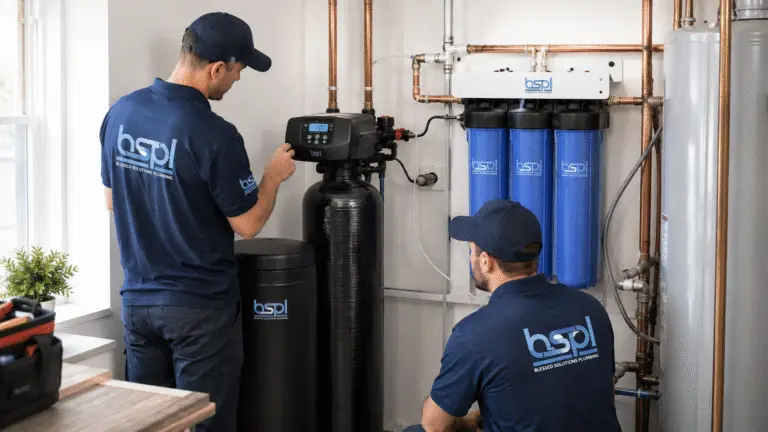
- Whole-home carbon tank: media rebed every 5–10 years.
- UV lamp: every 12 months, even if it still lights (output drops).
- Softener resin: 10–15 years on city water, less on iron-heavy wells.
Signs the cartridge is overdue
- Pressure drop at every tap (sediment filter clogged)
- Chlorine taste or smell is back (carbon exhausted)
- RO fills slowly or the TDS reading creeps up (membrane or pre-filters)
- Visible discoloration or slime on the cartridge when you open the housing
- It has been more than a year and you cannot remember the last change
An exhausted carbon filter can start releasing what it captured, and a slimy sediment filter grows bacteria. Overdue is worse than no filter.
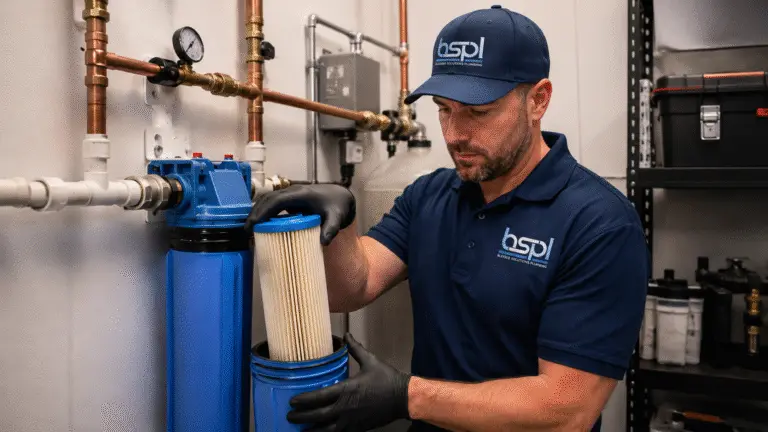
How to change a cartridge without a leak
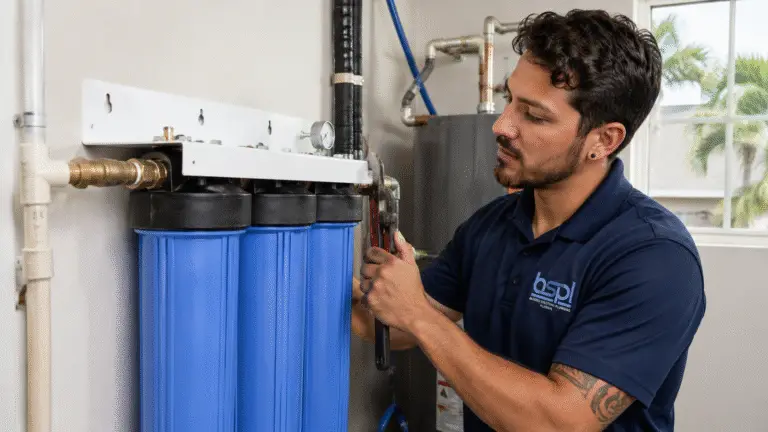
- Shut off the water at the valve before the filter (or use the bypass).
- Relieve pressure — press the red button on the housing cap or open a tap downstream.
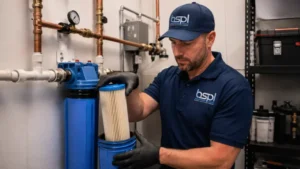
- Unscrew the housing with the filter wrench, keeping a bucket underneath.
- Remove the old cartridge and rinse the housing. Inspect the O-ring; wipe it clean and apply a thin film of silicone grease (never petroleum jelly). Replace it if flattened or cracked.
- Insert the new cartridge the right way up (some are directional).
- Hand-tighten the housing, then snug with the wrench — do not crank it.
- Open the water slowly, press the relief button to bleed air, and check for drips for several minutes.
- Flush carbon cartridges for 5–10 minutes until the water runs clear (fine carbon dust is normal at first).
Reverse osmosis: the extra steps
Turn off the feed valve and the tank valve, drain the faucet, swap the pre- and post-filters, and sanitize the system once a year with the manufacturer’s procedure. After a membrane change, discard the first full tank. Check the TDS of the RO water against the tap water: a good membrane removes 90–95%.
When to call us instead
Housings that will not unscrew, cracked housings, cartridges that are the wrong size, a whole-home carbon tank or softener that needs new media, or a system that never had a bypass valve. We service every brand and can put your whole-home system on an annual maintenance visit so you stop thinking about it. See water treatment services.
Why Central Florida homeowners call BSP1 Plumbing
Annual filter service, media rebeds and RO maintenance for every brand — on a schedule so you do not have to remember. Licensed, insured and bilingual (CFC1432849), serving Orlando, Kissimmee, St. Cloud and all of Central Florida. Call (321) 732-5615. ★★★★★ 411+ 5-star reviews on Google.
Frequently asked questions
Can I use a different brand cartridge?
Yes, if the size (for example 10″ × 2.5″ or 4.5″ “big blue”) and micron rating match. Proprietary systems and fridges usually need the OEM or a certified-compatible filter.
Why is there black water after a new carbon filter?
Loose carbon dust. Flush for 5–10 minutes until it runs clear; it is harmless but should not be sent through an RO membrane.
My RO tank is empty all the time — is it the filter?
Usually the pre-filters or the membrane are exhausted, or the tank’s air charge is low (it should be 5–7 psi when empty). Change the filters first; if it does not help, the membrane or tank needs service.
How do I know when a whole-home carbon tank needs new media?
Chlorine taste or smell returns and cartridges downstream load quickly. Most media lasts 5–10 years; we test the water before and after the tank to confirm.