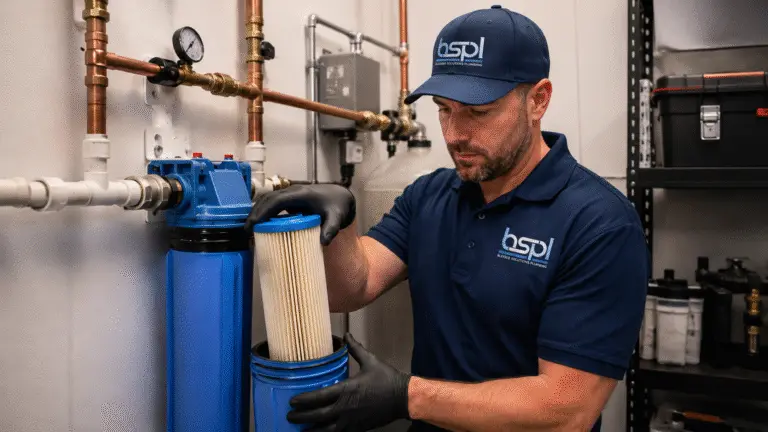
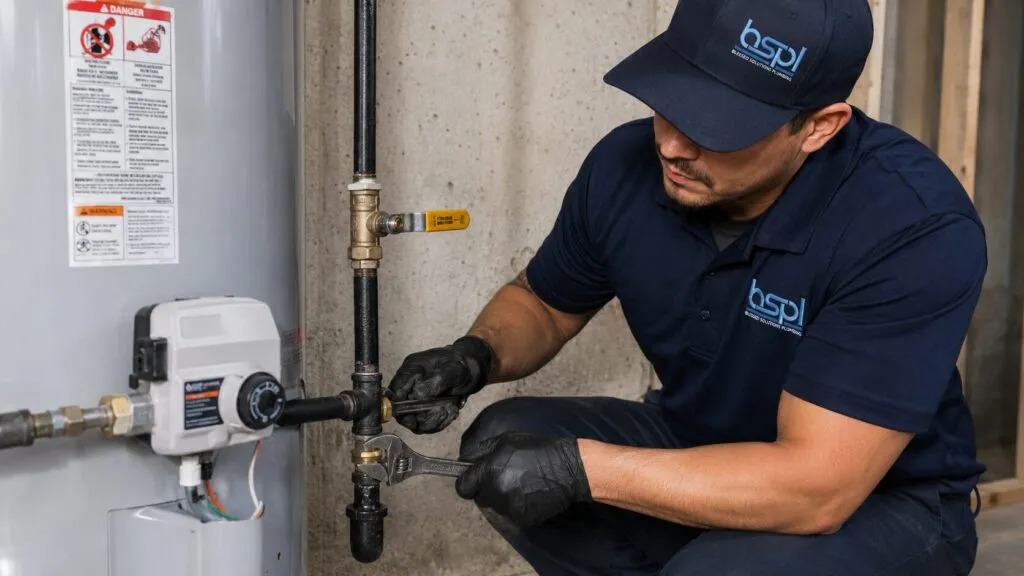
Quick answer: The five most common water heater complaints — no hot water, not enough hot water, water too hot, rumbling or popping, and water on the floor — each have one or two likely causes. Some you can check safely (a tripped breaker, a thermostat set too low, a pilot that went out); others (a failed heating element, a gas valve, a leaking tank) need a licensed plumber. A leaking tank is never repairable — that heater is done.
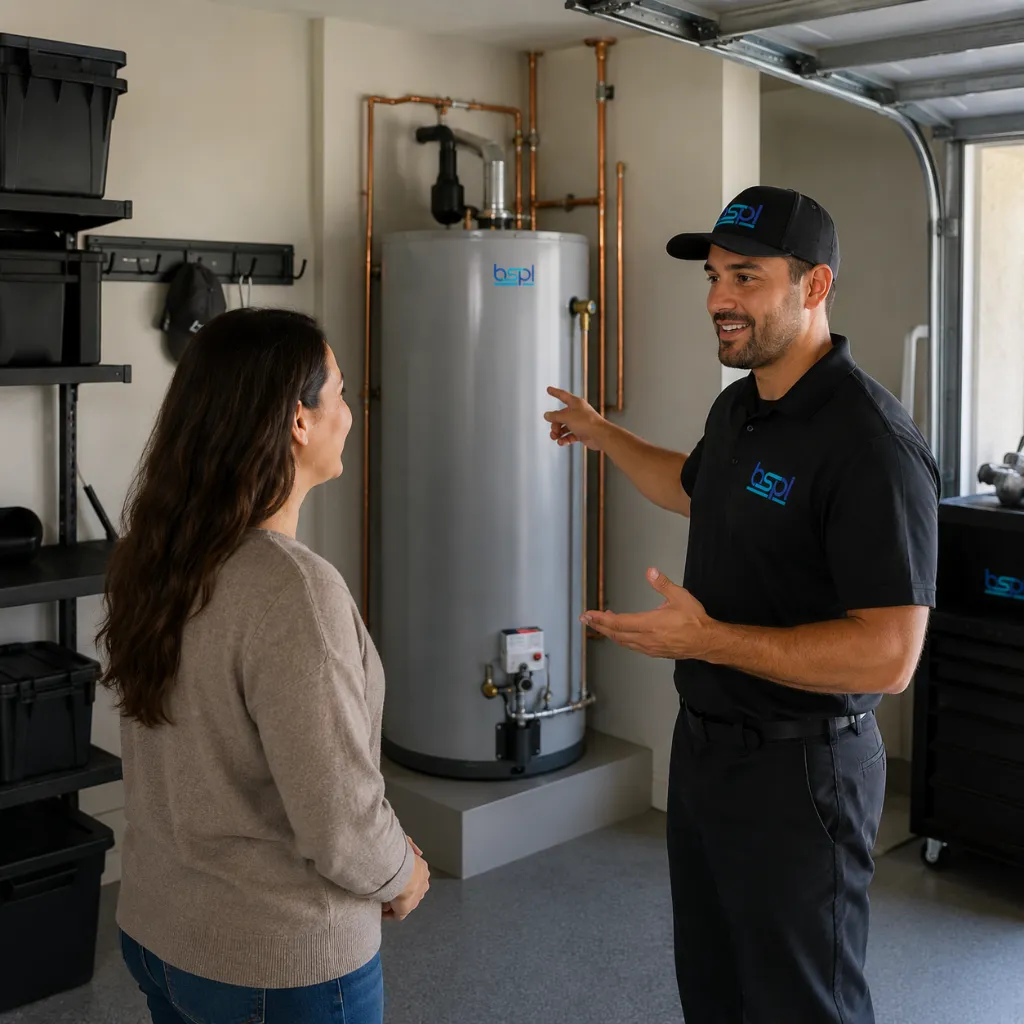
No hot water at all
Electric: check the breaker first — a 30-amp double breaker that tripped is the most common cause. If it trips again after resetting, do not keep resetting it; an element is shorted. Press the red reset button on the upper thermostat (behind the access panel; turn off power first). If it trips repeatedly, the upper element or thermostat has failed. Gas: check that the pilot is lit and the gas valve is on. Relight per the label on the tank. If the pilot will not stay lit, the thermocouple or gas valve is failing.
Not enough hot water / runs out fast
- Lower element failed (electric): the tank only heats the top third. Classic “five minutes of hot water” symptom.
- Sediment: Central Florida’s hard water drops minerals that fill the bottom of the tank and crowd out capacity. Flushing helps if it is done yearly; after years of neglect the sediment is a solid layer.
- Dip tube broken: cold water mixes at the top instead of the bottom. Warm, not hot, water from the start.
- Undersized tank: a 40-gallon tank for a family of five never had a chance. Consider a 50-gallon or a tankless.
Water too hot or scalding
Thermostat set above 120°F, or a stuck thermostat. Lower the setting and give it a few hours. If it keeps overheating and the pressure relief valve starts dripping, shut the heater off and call — a stuck thermostat is a safety issue.
Rumbling, popping or knocking
That is water boiling under a layer of sediment. Annual flushing prevents it; once the noise is loud the sediment is usually too compacted to flush and the tank is working harder than it should. On a tank older than 8–10 years, plan for replacement rather than fighting it.
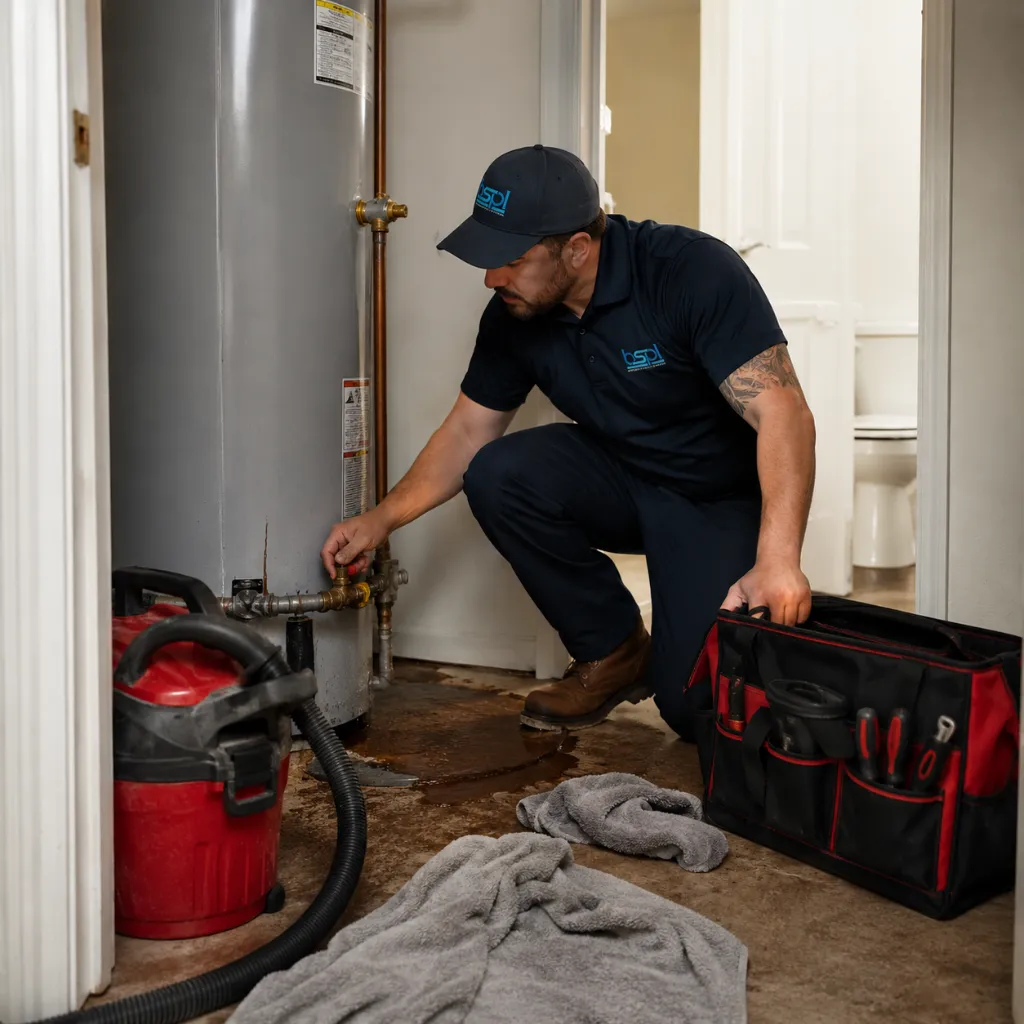
Water on the floor
Find where it is coming from before you decide anything:
- From a fitting on top (cold inlet, hot outlet, flex lines): repairable.
- From the T&P relief valve pipe: the valve may be doing its job (high pressure or temperature) or it may be worn. Repairable, but find out why it is releasing — a failed expansion tank or a pressure regulator is common in Orlando homes.
- From the drain valve: replace the valve.
- From the tank itself (rust streaks, water from under the jacket): the tank has corroded through. Replace it today — a 40-gallon tank letting go in a garage closet is a water damage claim.
What is safe to do yourself
Resetting a breaker once, pressing the thermostat reset once, relighting a pilot by the label instructions, lowering the thermostat and flushing the tank with the power off. What is not: replacing elements or thermostats without turning off the power at the breaker and testing, any gas valve work, and anything on a tank that is leaking from the body.
Repair or replace?
Rule of thumb: under 8 years old and not leaking, repair. Over 10 years old, leaking from the tank, or needing a second repair in a year, replace. Florida’s water is hard on tanks, and the warranty on most standard units is 6 years for a reason. Our water heater services page covers repairs, same-day replacements and tankless upgrades.
Why Central Florida homeowners call BSP1 Plumbing
Same-day water heater repair and replacement, tank and tankless, with upfront pricing. Licensed, insured and bilingual (CFC1432849), serving Orlando, Kissimmee, St. Cloud and all of Central Florida. Call (321) 732-5615. ★★★★★ 411+ 5-star reviews on Google.
Frequently asked questions
Why did my water heater breaker trip?
Usually a shorted heating element or a thermostat that failed closed. Reset it once; if it trips again, stop and call — repeated resets can damage the wiring.
How often should I flush my water heater in Florida?
Once a year. With a water softener, every one to two years. Skipping it for several years lets sediment harden into a layer that cannot be flushed.
Is a dripping T&P valve dangerous?
It can be. The valve releases when pressure or temperature is too high. A few drops after heavy use can be normal; a steady drip means the valve, the thermostat or the expansion tank needs attention.
Can a leaking water heater tank be repaired?
No. Once the steel tank corrodes through, the only fix is replacement. Fittings, valves and elements can be repaired; the tank cannot.