Quick answer: There is no single “best” water filter — there is a best filter for your water. In Central Florida, city water is hard and chlorinated; well water is often hard with sulfur, iron and sediment. The usual answers are a water softener for hardness, a whole-home carbon filter for chlorine taste and odor, a sediment filter for wells, an iron or sulfur filter when you have the rotten-egg smell, and a reverse osmosis unit at the kitchen sink for drinking water. Test first, then choose.
Step 1: Know what is in your water
City water (Orlando, Kissimmee, St. Cloud, Toho Water) comes from the Floridan Aquifer and is treated with chlorine or chloramine. It is safe but hard (typically 150–300 ppm of calcium carbonate) and often tastes of chlorine. Well water, common in St. Cloud, Osceola and rural Orange County, skips the treatment plant: hardness, iron staining, sulfur (hydrogen sulfide) smell and sand are the usual complaints. A basic test kit or a lab test tells you hardness, iron, pH and chlorine — that is enough to choose.
Step 2: Match the problem to the filter
- Scale on fixtures, dry skin, spotty dishes → water softener (ion exchange). A salt-free “conditioner” reduces scale but does not soften; it is a compromise for homes that cannot use salt.
- Chlorine taste or smell, dry hair → whole-home catalytic carbon filter. Often combined with a softener in one cabinet.
- Rotten-egg smell → sulfur filter (air injection/oxidation or catalytic carbon) ahead of the softener. On a well, check the water heater anode too; a magnesium anode can create the smell.
- Orange or black staining → iron/manganese filter, sized to the test results.
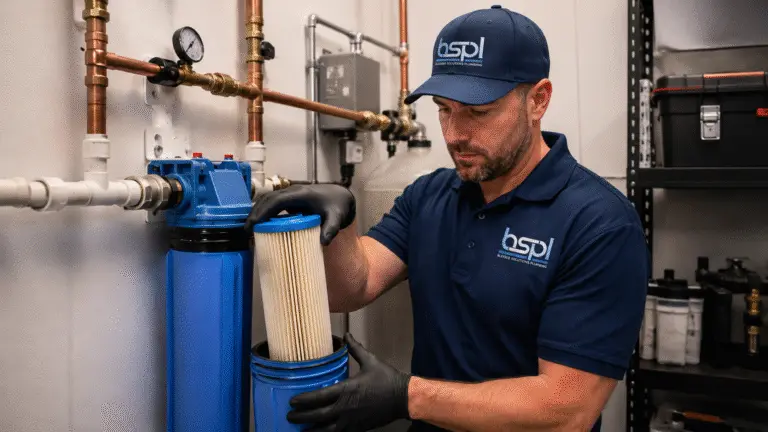
- Sand or cloudiness (wells) → spin-down sediment filter ahead of everything else.
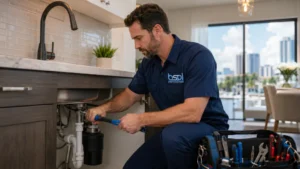
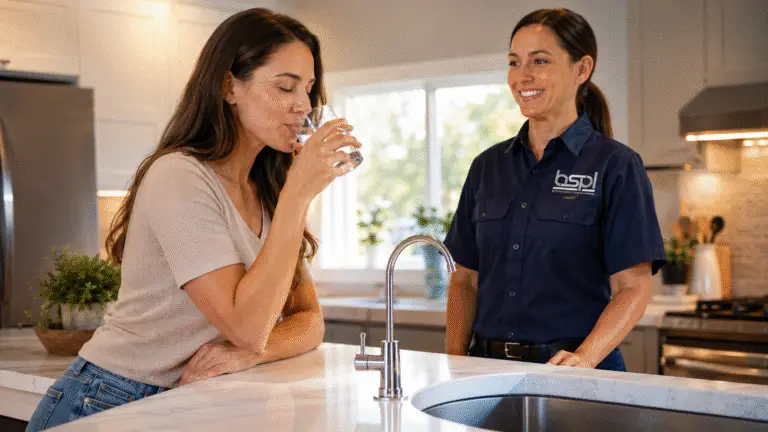
- Drinking water taste, lead or PFAS concerns → reverse osmosis at the kitchen sink. Whole-home RO is rarely worth it.
- Bacteria on a well → UV sterilizer after filtration.
Whole-home vs. point-of-use
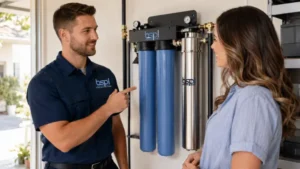
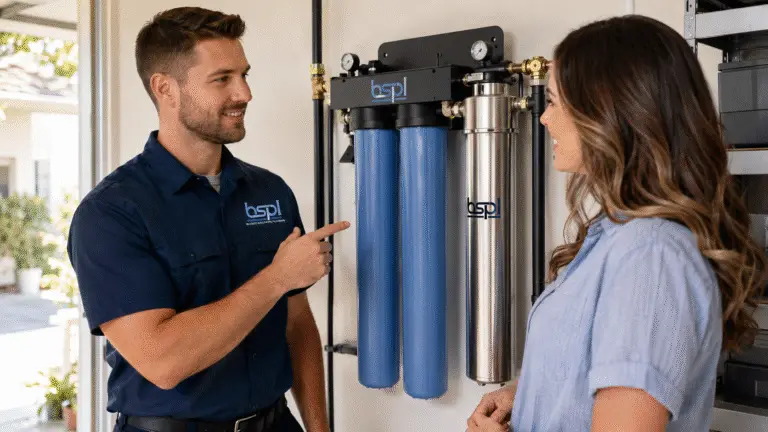
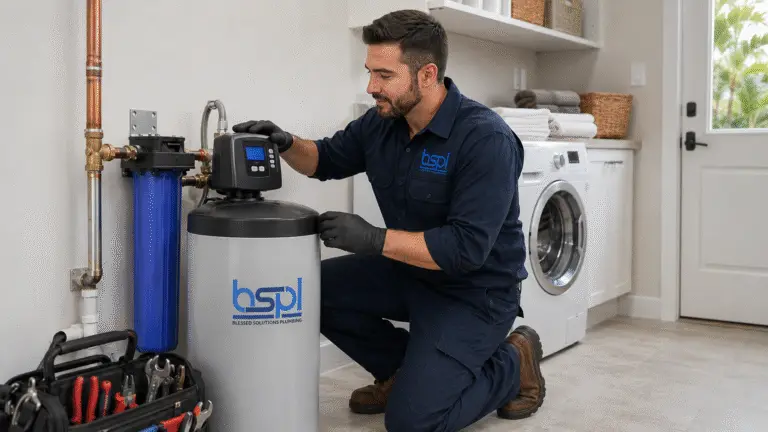
Whole-home systems install at the main line (usually in the garage) and treat every tap, shower and appliance. Point-of-use systems — an RO under the sink, a filter on the fridge line — treat one outlet. For most families the right combination is one whole-home system for hardness and chlorine, plus an RO for drinking and cooking water. Buying a whole-home RO or a softener “for taste” is where people overspend.
Sizing and the details that matter
- Flow rate: a whole-home filter must handle peak demand (two showers plus a washer). Undersized units drop pressure.
- Grain capacity (softeners): based on hardness × people × gallons per day. Oversizing wastes salt; undersizing regenerates constantly.
- Bypass valve and drain: softeners and backwashing filters need a drain and, in Florida, must not discharge to the septic drain field in some counties — ask us.
- Certification: look for NSF/ANSI 42 (taste/odor), 44 (softeners), 53 (health contaminants) and 58 (RO).
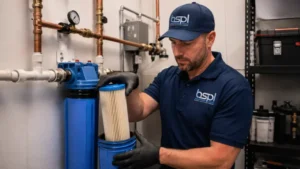
- Maintenance: salt monthly, carbon media every 5–10 years, RO filters every 6–12 months, membrane every 2–4 years.
What we usually recommend in Central Florida
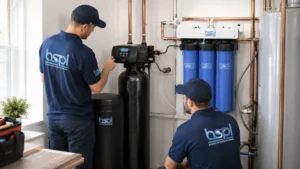
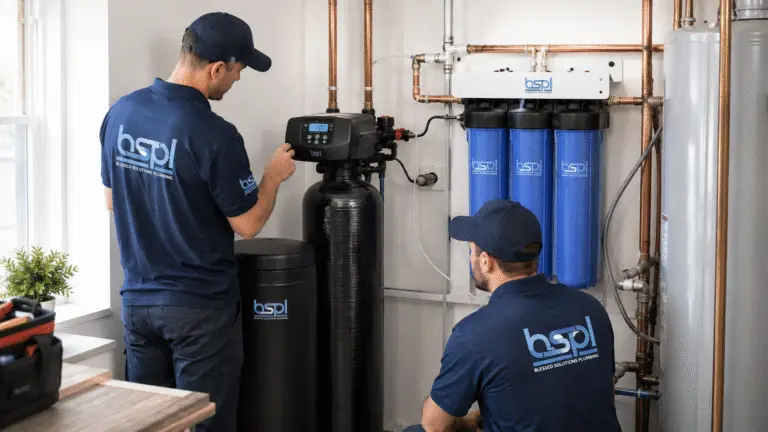
City water in Orlando, Kissimmee or St. Cloud: a softener with a carbon pre-filter plus a kitchen RO. Well water in St. Cloud or Osceola: sediment → sulfur/iron filter → softener → RO at the sink, with UV if the well tests positive for bacteria. We test on site, size the system to your household, and install with a bypass, a proper drain and a shutoff so maintenance is easy. See our water treatment page for systems and installation.
Why Central Florida homeowners call BSP1 Plumbing
We test your water first and install softeners, whole-home filters, sulfur/iron systems and RO units sized to your home. Licensed, insured and bilingual (CFC1432849), serving Orlando, Kissimmee, St. Cloud and all of Central Florida. Call (321) 732-5615. ★★★★★ 411+ 5-star reviews on Google.
Frequently asked questions
Is Orlando tap water safe to drink?
Yes, municipal water meets federal standards. The common complaints are hardness, chlorine taste and odor — comfort and equipment issues, not safety. Well water should be tested yearly.
Softener or filter — which do I need?
A softener removes hardness minerals (scale); a filter removes taste, odor, sediment or specific contaminants. Most Central Florida homes benefit from both, often in one combined unit.
Do water softeners add a lot of salt to the water?
Softened water contains a small amount of sodium proportional to the hardness removed. For drinking, most families add a reverse osmosis unit at the kitchen sink, which removes it.
How much does a whole-home water filter cost installed?
It depends on the system type and your water test. We give a firm quote after testing — and we show you the test results so you are not buying equipment you do not need.