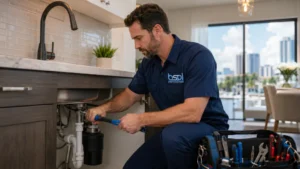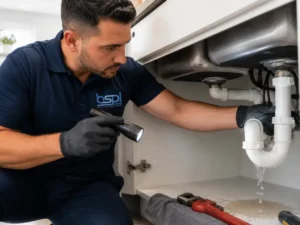
Quick answer: To clean a P-trap, put a bucket under it, loosen the two slip nuts by hand or with channel-lock pliers, pull the trap off, dump and scrub it, check the washers, and reassemble hand-tight plus a quarter turn. You do not need a “P-trap cleaner” product — hot water and a bottle brush do the job, and chemical cleaners can damage the trap and the drain line behind it. If the sink is still slow with a clean trap, the clog is further down and needs a drain machine.
What a P-trap does (and why it smells)
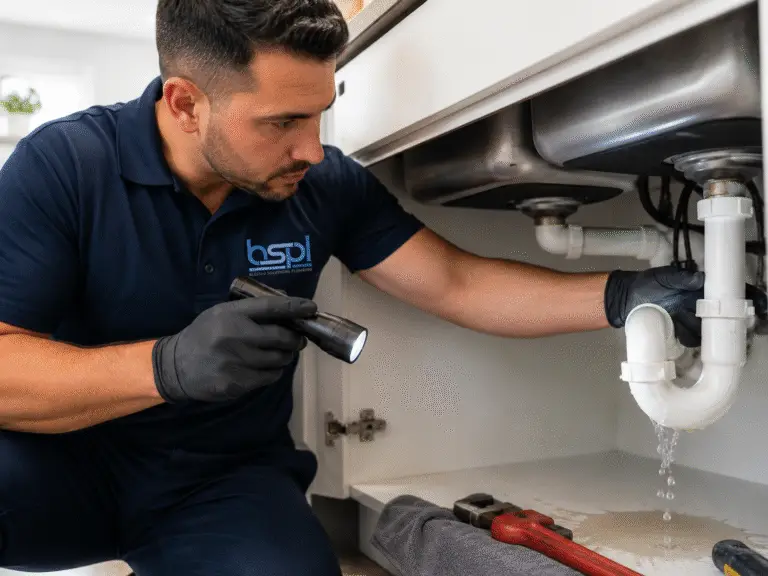
The U-bend under the sink holds a few ounces of water that seal the drain so sewer gas cannot come up into the room. It also catches whatever falls down the drain: hair, toothpaste, rings, and the soap scum that glues it all together. When the trap is half-blocked the sink drains slowly and the trapped gunk starts to smell. If a sink has not been used for weeks, the water in the trap evaporates and the smell is sewer gas — run the tap for a minute to refill it.
Tools you need
- A bucket or a shallow pan
- Channel-lock pliers (for metal nuts; plastic nuts usually loosen by hand)
- A bottle brush or an old toothbrush
- A towel and, ideally, a flashlight
- Replacement slip-joint washers (cheap; keep a pair on hand)
Step by step
- Clear the cabinet and place the bucket under the trap.
- Loosen the slip nuts — one where the trap meets the tailpiece coming down from the sink, one where it meets the wall arm. Turn counter-clockwise. Plastic nuts: by hand. Metal nuts: pliers, gently.
- Remove the trap and let it drain into the bucket. Expect a smell.
- Scrub it with the brush under hot running water. Look inside the wall arm and the tailpiece too; hair collects on the stopper linkage.
- Check the washers. Flattened, cracked or brittle washers leak after reassembly — replace them now.
- Reassemble with the beveled side of each washer facing the joint. Hand-tight, then a quarter turn with pliers for metal. Do not overtighten plastic.
- Run water and watch the joints for a full minute before putting things back in the cabinet.
If the slip nut will not loosen
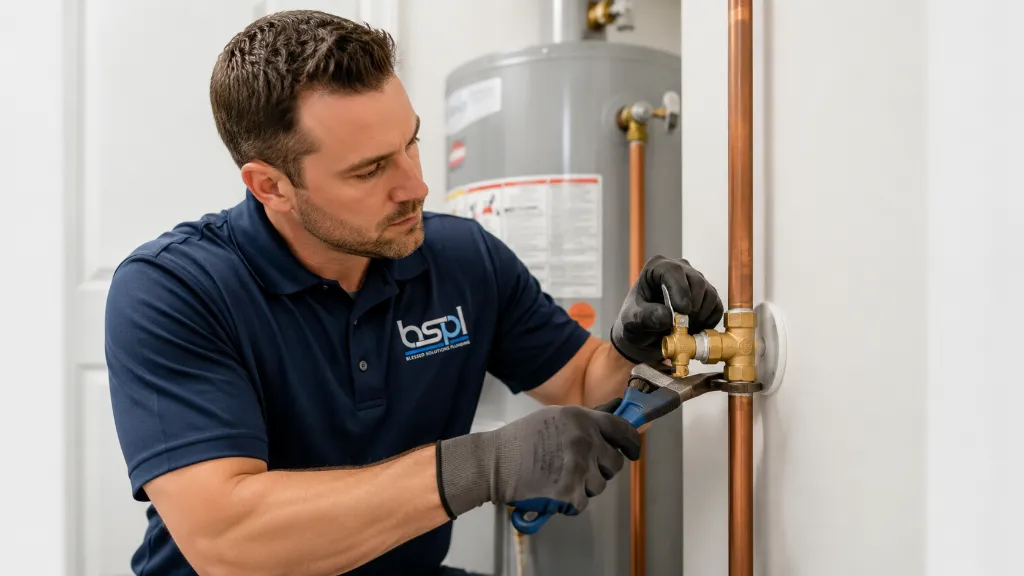
Old chrome traps corrode at the nut. Do not force a brittle nut with big pliers — it will crack and you will be without a sink until it is replaced. Spray penetrating oil, wait 10 minutes, and try again with light pressure. If it still will not move, it is time to replace the trap assembly, which is inexpensive and takes a plumber about 20 minutes.
Mistakes that turn this into a plumber call
- Pouring chemical drain cleaner before removing the trap — now the trap is full of caustic liquid
- Overtightening plastic nuts until they crack
- Reinstalling the trap with the washers backwards (slow leak that rots the cabinet floor)
- Forcing a corroded metal nut
- Removing the trap when the clog is actually in the wall — the water keeps coming
When the clog is past the trap
If the trap is clean but the sink still drains slowly, or if the clog is in a shower (which has no accessible trap), the blockage is in the branch line inside the wall. That needs a small drain machine through the wall arm or the cleanout — a routine drain cleaning visit. If several fixtures are slow, read our guide on drain backups and when they are a sewer line problem.
Why Central Florida homeowners call BSP1 Plumbing
Slow sink after cleaning the trap, or a trap that will not come apart? We handle it in one visit. Licensed, insured and bilingual (CFC1432849), serving Orlando, Kissimmee, St. Cloud and all of Central Florida. Call (321) 732-5615. ★★★★★ 411+ 5-star reviews on Google.
Frequently asked questions
Do I need a P-trap cleaner product?
No. Hot water, a bottle brush and dish soap clean a P-trap completely. Enzyme drain treatments are fine for maintenance; avoid caustic chemical cleaners.
Why does my bathroom sink smell even after cleaning the trap?
Either the overflow channel in the sink is coated with biofilm (clean it with a brush and hot water), the stopper and linkage are dirty, or the trap dried out from disuse. If the smell is sewer gas and persists, the vent may be blocked.
How tight should the slip nuts be?
Hand-tight plus about a quarter turn with pliers on metal nuts. Plastic nuts: hand-tight only. Overtightening cracks the nut and crushes the washer.
Can I replace a P-trap myself?
Yes, a plastic trap kit is a straightforward DIY job if the wall arm and tailpiece are in good shape. If the wall arm is corroded or the drain in the wall is leaking, call a plumber.