Quick answer: Before buying a drinking water filter, check ten things: (1) what is actually in your water, (2) the NSF/ANSI certification numbers, (3) whether it removes the contaminant you care about, (4) flow rate, (5) the waste-water ratio on RO units, (6) filter life and yearly cartridge cost, (7) where it will be installed and whether it needs a drain, (8) whether it keeps or strips healthy minerals, (9) the faucet or dispenser it comes with, and (10) who services it. The checklist below explains each one for Central Florida water.
1. Start with a water test
City water in Orlando, Kissimmee and St. Cloud is hard and chlorinated; the annual Consumer Confidence Report from your utility lists what was found. Well water should be lab-tested for bacteria, nitrates, iron, sulfur and hardness. You cannot choose a filter for a problem you have not identified.
2. Read the NSF/ANSI numbers, not the marketing
- 42 — taste, odor, chlorine (aesthetic)
- 53 — health contaminants (lead, cysts, VOCs, some PFAS)
- 58 — reverse osmosis systems
- 401 — pharmaceuticals and emerging contaminants
- P473 / 53 PFAS — PFOA/PFOS reduction
“Tested to NSF standards” is not the same as certified. Look for the certification mark and the specific claim.
3. Does it remove what you care about?
A carbon pitcher improves taste; it does not remove nitrates, fluoride or dissolved solids. Reverse osmosis removes most dissolved contaminants but needs a carbon stage for chlorine. UV kills bacteria but removes nothing. Match the technology to the test result.
4. Flow rate
Faucet-mount and pitcher filters are slow by design. Under-sink carbon systems deliver near full flow. RO produces water slowly into a storage tank — fine for drinking and cooking, not for filling pots fast unless you add a larger tank or a tankless RO.
5. Waste ratio (RO only)
Older RO units send 3–4 gallons down the drain per gallon produced; modern units are 1:1 or better. On a well with a septic system, this matters.
6. Filter life and yearly cost
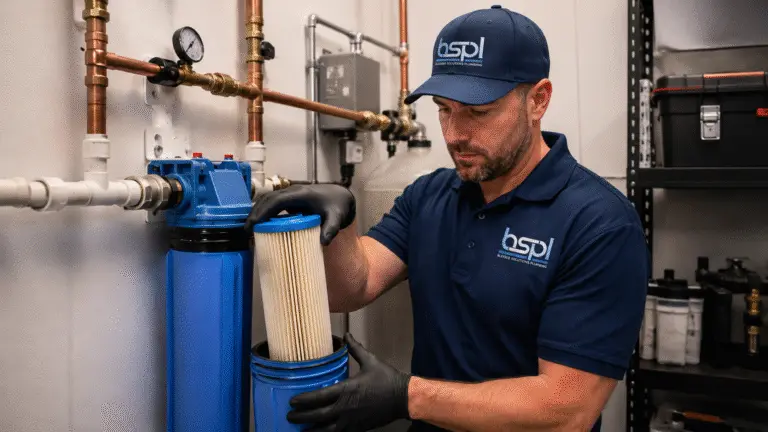
Add up every cartridge the system needs per year. A cheap unit with four proprietary filters can cost more over three years than a quality system with standard-size cartridges. Our replacement schedule guide lists typical intervals.
7. Installation: space, drain and faucet hole
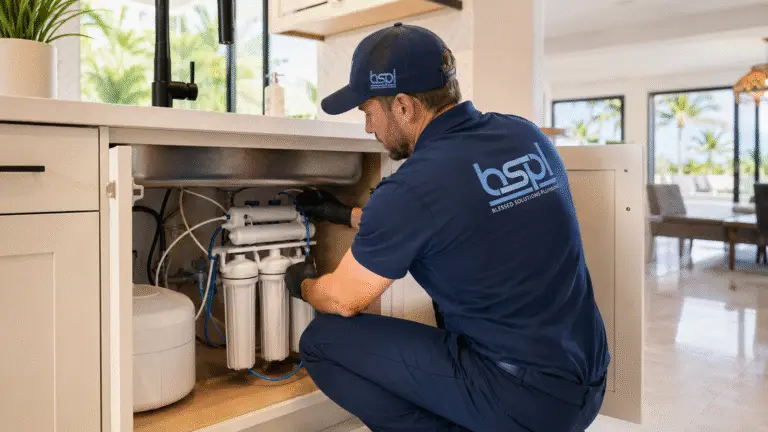
Under-sink systems need cabinet space and a cold-water connection; RO also needs a drain connection and usually a dedicated faucet, which means a hole in the counter or sink deck. Granite and quartz need the right bit — or a plumber.
8. Minerals in, minerals out
RO strips calcium and magnesium along with everything else; the water tastes flat to some people. Remineralization post-filters put a measured amount back. Carbon systems leave minerals in.
9. The faucet and dispenser
A flimsy plastic faucet is the first thing to fail. Look for a lead-free brass faucet with a finish that matches the kitchen; air-gap faucets are required by code in some jurisdictions for RO drains.
10. Who services it
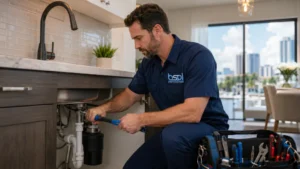
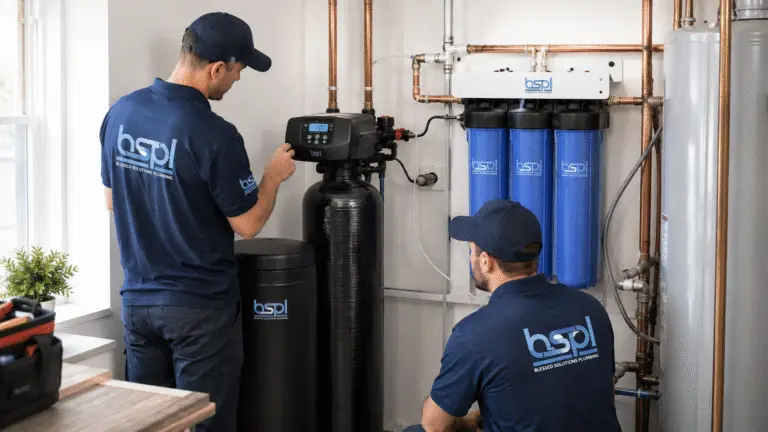
Box-store systems are yours to maintain. A plumber-installed system comes with a known bypass, a proper drain connection, correct faucet installation and someone to call. BSP1 installs and services RO and under-sink filters across Central Florida — see water treatment.
Our short list for Central Florida kitchens
- Taste and chlorine only: a certified under-sink carbon block (NSF 42/53).
- Broad protection, well water, or you want the best-tasting water: 4- or 5-stage reverse osmosis (NSF 58) with remineralization.
- Renters: a certified faucet-mount or countertop unit, no plumbing changes.
Why Central Florida homeowners call BSP1 Plumbing
We install under-sink filters and reverse osmosis systems with a proper drain, faucet and bypass — and we test your water first. Licensed, insured and bilingual (CFC1432849), serving Orlando, Kissimmee, St. Cloud and all of Central Florida. Call (321) 732-5615. ★★★★★ 411+ 5-star reviews on Google.
Frequently asked questions
Is a reverse osmosis system worth it in Orlando?
For drinking and cooking water, yes for most families: it removes dissolved solids, chlorine taste and most contaminants of concern. For the whole house, a softener and carbon filter are the better investment.
Do pitcher filters remove anything important?
Certified pitchers reduce chlorine, some lead and some pharmaceuticals, and improve taste. They do not remove nitrates, fluoride or dissolved solids, and their small cartridges need frequent replacement.
Does RO water need remineralization?
Not for health, but many people prefer the taste with minerals added back. A remineralization post-filter is an inexpensive add-on.
Can you install a drinking water filter on a granite counter?
Yes. We drill the faucet hole with the proper diamond bit, install the faucet, connect the drain and feed, and leave the system with a bypass and a shutoff.