Your water heater is one of the hardest-working appliances in your home, and in Central Florida it is also one of the most expensive to run year after year. So when it is time to replace it, the question comes up every time: should you stay with a traditional tank, or make the jump to tankless?
There is no single right answer, but there is a right answer for your home. This guide compares tankless and tank water heaters on the things that actually matter in Orlando, Kissimmee, and St. Cloud: upfront cost, monthly operating cost, lifespan, hot-water capacity, and space, so you can decide with confidence instead of guessing.
How each one works
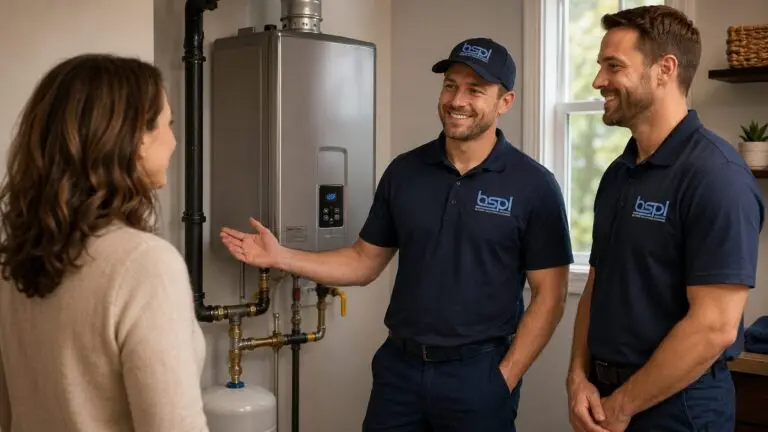
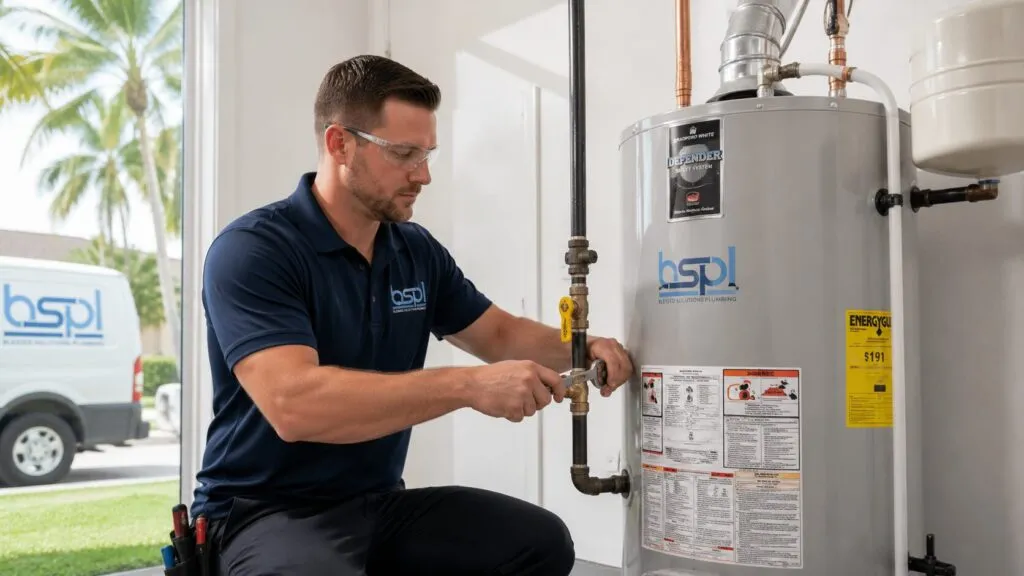
A tank water heater stores 40 to 80 gallons of water and keeps it hot around the clock, reheating it whenever the temperature drops. When you open a hot tap, you draw from that stored supply. A tankless water heater has no storage. It sits on a wall and fires a powerful gas burner or electric element only when a hot tap is open, heating the water as it passes through. Close the tap and it shuts off. That one difference drives almost every other comparison below.
Upfront cost
Tank units cost less to buy and less to install, which is why they remain the most common choice in Florida. Tankless units cost more, and the installation can add to that if your home needs a larger gas line, new venting, or an electrical upgrade to support the unit’s higher instantaneous demand. The gap is real, but it narrows once you account for operating cost and lifespan.
Energy use and operating cost
Because a tank reheats stored water all day and night, it suffers from standby loss: you pay to keep water hot even while you are at work or asleep. A tankless unit heats water only when you use it, so there is no standby loss at all. For most households that translates into a meaningfully lower monthly bill, and the savings are largest for homes with moderate, spread-out hot-water use.
Lifespan
This is where tankless pulls ahead decisively. A typical tank water heater lasts 8 to 12 years, and in Florida’s hard water it often leans toward the shorter end as sediment builds up and the tank corrodes. A well-maintained tankless unit lasts 20 or more years, which means one tankless unit routinely outlasts two tank units. When you factor that in, the higher upfront price looks very different.
Hot water capacity
A tank gives you a fixed reserve: 50 gallons means 50 gallons, and when it is gone you wait for recovery. A tankless unit gives you endless hot water at its rated flow, so a long shower never runs cold. The limitation is flow rate: a tankless unit can only heat so many gallons per minute at once. If two showers, the dishwasher, and the washing machine all run simultaneously in a large household, you may need a larger unit or a second one. Proper sizing solves this, which is why we calculate your peak demand before recommending a model.
Space and placement
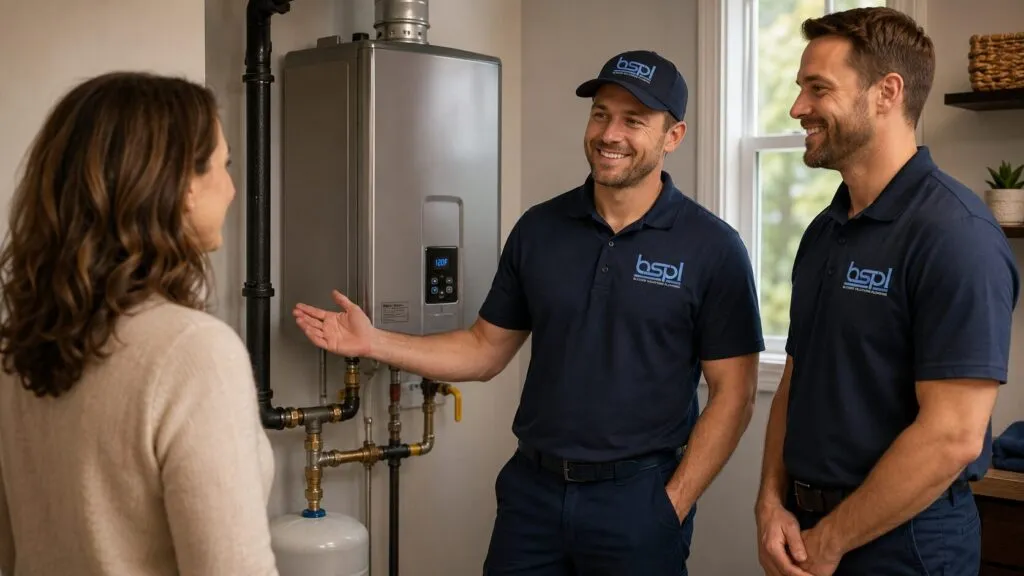
Tank units need floor space in a garage, closet, or utility room. Tankless units are wall-mounted and compact, roughly the size of a small suitcase, which frees up the space a tank used to occupy and offers more flexible placement, including closer to the fixtures that use the most hot water.
Quick comparison
- Upfront cost: Tank lower; tankless higher (more if gas/venting/electrical upgrades are needed).
- Operating cost: Tank has standby loss; tankless heats only on demand.
- Lifespan: Tank 8–12 years; tankless 20+ years.
- Hot water: Tank is limited to its capacity; tankless is endless at its flow rate.
- Space: Tank needs floor space; tankless mounts on the wall.
- Maintenance: Both benefit from annual service; tankless needs periodic descaling in hard water.
So which should you pick?
Choose a tank if you want the lowest upfront cost, your current setup is simple to replace like-for-like, or you have very high simultaneous demand and prefer a large stored reserve. Choose tankless if you plan to stay in the home for years, want lower monthly bills, hate running out of hot water, or want to reclaim the space. Many Florida homeowners also consider a high-efficiency hybrid as a third option that splits the difference on cost and efficiency.
Frequently asked questions
Is a tankless water heater worth it in Florida?
For most homeowners who plan to stay put, yes. Florida’s year-round demand plus the 20-plus-year lifespan and the elimination of standby loss means the higher upfront cost is usually recovered, and one tankless unit typically outlasts two tanks.
How long does a tankless water heater last?
Twenty years or more with proper maintenance, versus 8 to 12 years for a typical tank. Annual descaling is especially important in Central Florida’s hard water.
Can a tankless water heater run two showers at once?
A properly sized unit can. Tankless units are rated by gallons per minute, so we calculate your peak demand and size the unit (or recommend a second unit) so you never run short.
Does a tankless water heater need a bigger gas line?
Often, yes. Tankless units draw a lot of gas while running, so the existing line may need to be upsized. We check this during the estimate and include it in your upfront price if needed.
Get expert help sizing your water heater
Blessed Solutions Plumbing installs and services tank, tankless, and hybrid water heaters throughout Orlando, Kissimmee, St. Cloud, and Central Florida, with upfront pricing, financing on new installs, and hundreds of 5-star reviews. We size the unit to your actual household, not a guess. See all of our water heater services.
Call (321) 732-5615 or schedule online for a water heater estimate today.