Quick answer: A 50-year-old sewer line in Central Florida is almost always cast iron (inside the slab) or clay (in the yard), and both fail the same way: scale and channeling in the cast iron, root intrusion and offset joints in the clay. You have four options — a spot repair, cured-in-place pipe lining, pipe bursting, or traditional dig-and-replace. The right one depends on what the camera shows, not on what is cheapest today. Start with a sewer camera inspection; everything else follows from it.
Why 1970s sewer lines fail
Cast iron drain lines under the slab corrode from the inside. The bottom of the pipe wears first (channeling) until it is a half-pipe that holds water and debris, which is why older homes get repeat clogs in the same spot. Clay lines in the yard have joints every few feet; roots find the joints, and settling soil creates offsets and bellies. Fifty years is a full life for both materials.
Option 1: Spot repair
What it is: dig or cut to the one bad section and replace a few feet with PVC. Best for: a single break, a crushed section near the cleanout, or an offset joint, when the rest of the line is in fair shape. Downside: if the camera shows wear along the whole run, a spot repair just moves the next failure a few feet down.
Option 2: Cured-in-place pipe lining (CIPP)
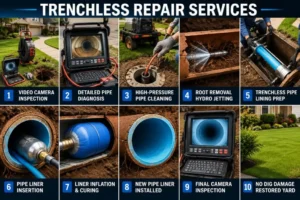
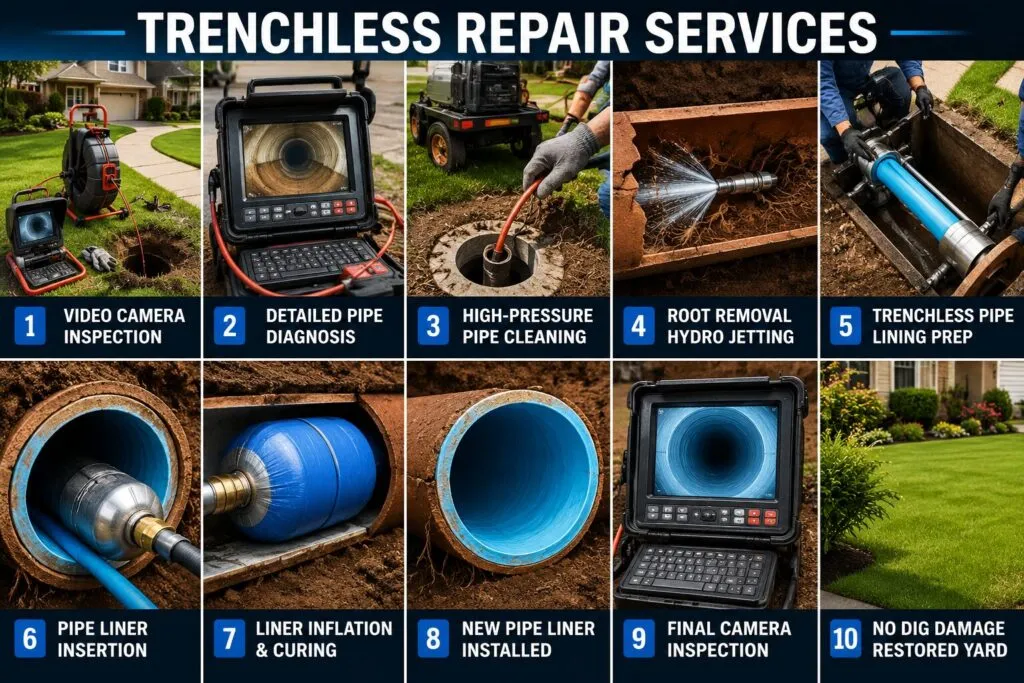
What it is: a resin-saturated liner is inverted or pulled through the existing pipe and cured in place, creating a new seamless pipe inside the old one. Best for: cast iron under the slab and clay with root intrusion, when the pipe is still round and continuous. No floors or driveway come up. Downside: it cannot fix a collapse or a severe belly, and it reduces the diameter slightly. See trenchless sewer repair.
Option 3: Pipe bursting
What it is: a bursting head is pulled through the old pipe, breaking it outward while pulling a new HDPE pipe behind it. Needs an entry and an exit pit. Best for: yard lines that are too damaged to line, or when you want to go up a size. Downside: not suitable under slabs or near other utilities.
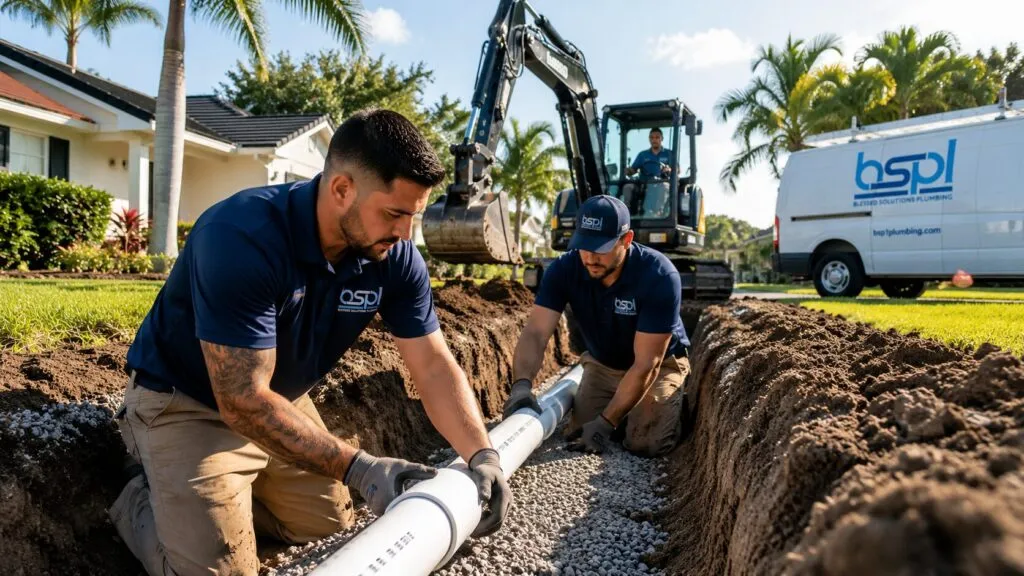
Option 4: Traditional dig-and-replace
What it is: excavate the line and lay new PVC with proper slope. Best for: collapsed pipe, major bellies, or lines so deteriorated that nothing can be pulled through them. Downside: landscaping, driveways and slabs are disturbed, and under a slab it means breaking floors.
How we choose in Central Florida
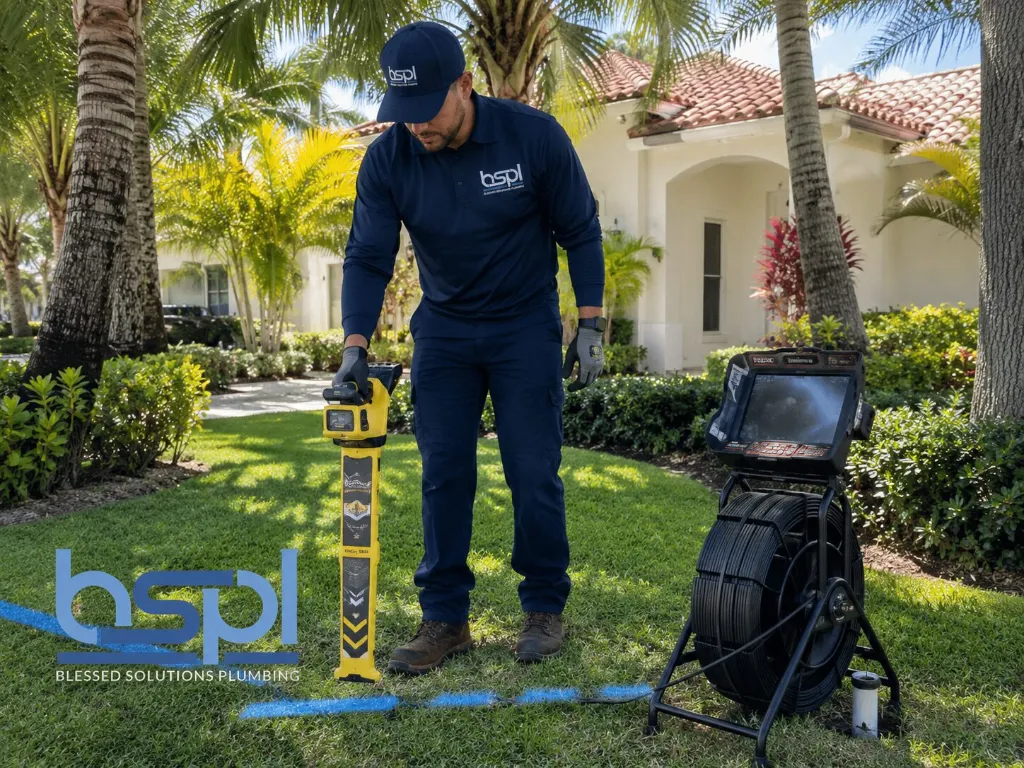
- Camera first, always. We record the inspection and show you the footage.
- Under the slab: lining when the pipe is continuous; spot repair through the floor when it is one break; reroute overhead in some cases.
- In the yard: lining for roots and joints; bursting or replacement for bellies and collapses.
- High water table: common here — it favors trenchless, because open trenches fill with water.
- Age of the rest of the line: if 80% of the pipe is worn, we do not recommend fixing 10% of it.
What about just jetting it every year?
Hydro-jetting is excellent maintenance for roots and scale, and for many homeowners it buys several more years. But it does not add metal back to a channeled cast iron pipe. When the camera shows the bottom of the pipe is gone, it is time to choose one of the four options above.
Why Central Florida homeowners call BSP1 Plumbing
We camera every old line before quoting, and we offer lining, bursting and replacement — so the recommendation fits the pipe, not the truck. Licensed, insured and bilingual (CFC1432849), serving Orlando, Kissimmee, St. Cloud and all of Central Florida. Call (321) 732-5615. ★★★★★ 411+ 5-star reviews on Google.
Frequently asked questions
How long does a 50-year-old sewer line last?
It is already past its design life. Cast iron is typically rated 50–75 years and clay 50–60, and Florida’s soil and water shorten both. Plan on repair or replacement in the next few years, not decades.
Is trenchless sewer repair cheaper than digging?
Often similar in price per foot, but far cheaper overall once you count the floors, driveway and landscaping you do not have to replace. Under a slab, lining is usually the most economical total cost.
How long does pipe lining last?
Cured-in-place liners are typically rated for 50 years. The liner is seamless, so roots have no joints to enter.
Can you line a pipe that has a belly?
A slight belly can be lined but will still hold some water; a severe belly needs to be excavated and re-graded. The camera and a sonde locator tell us the depth and length of the belly before we recommend anything.