
Leaking pipes or rusty water can’t wait. When your home’s plumbing shows signs of wear, a whole-home repipe might be the answer. This guide walks you through the repipe process in Central Florida—from choosing between PEX, copper, or CPVC to understanding permits and costs. Learn why a trusted local plumber like Blessed Solutions Plumbing ensures your system stays worry-free and code-compliant. For more information on repiping costs, visit this link.
Understanding the Need for Repiping
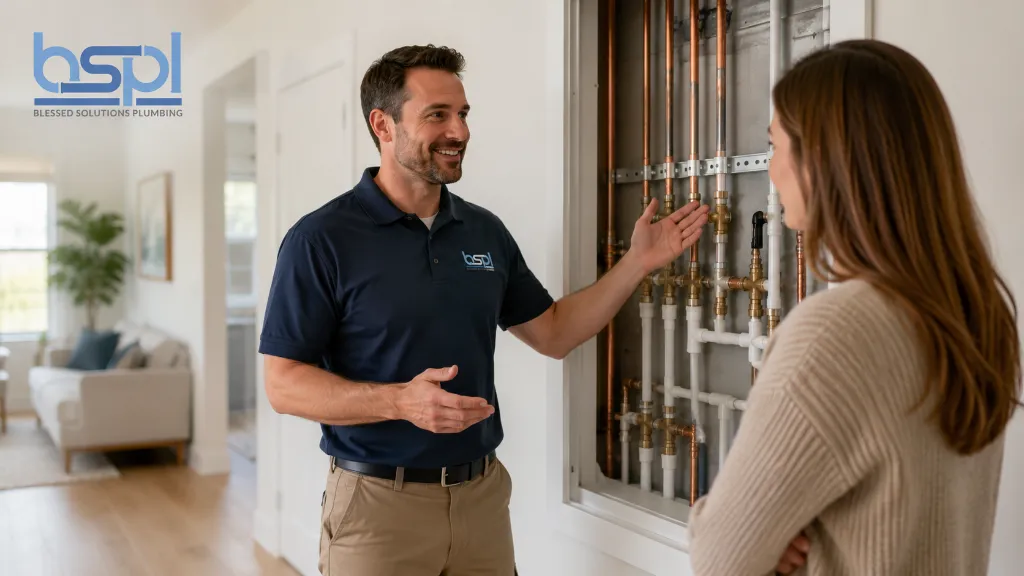
When you notice leaks or rusty water, it’s time to think about repiping. Your home’s pipes might be begging for attention, and acting quickly saves headaches later.
Signs It’s Time to Repipe
Do you have low water pressure or rusty water? These could mean it’s time for new pipes. Pinhole leaks and slab leaks are also common signs. If your house has old galvanized pipes, it’s crucial to consider a whole-home repipe. These pipes corrode over time, leading to water quality issues and leaks.
Water discoloration and frequent leaks point to underlying problems. Ignoring these signs might lead to bigger issues, like water damage or mold. By addressing them early, you maintain your home’s value and safety. Plus, a repipe offers peace of mind knowing you’ve tackled a major concern head-on.
Benefits of a Whole-Home Repipe
Why choose a whole-home repipe? It improves water flow and quality. No more rusty water or frequent leaks. By replacing old pipes with newer materials like PEX, you boost your home’s plumbing efficiency.
A repipe can increase your home’s value. Potential buyers view updated plumbing as a plus. It’s a long-term investment that pays off in peace of mind and property value. Plus, with modern materials, you reduce maintenance needs and save on future repair costs.
Choosing the Right Materials
Deciding on materials is a key step. Your choice affects cost, durability, and suitability for Central Florida’s climate. Let’s explore your options.
PEX vs. Copper vs. CPVC
PEX, copper, and CPVC each have advantages. PEX is flexible and resistant to scale build-up, making it a popular choice. It’s also less expensive than copper. Copper, known for durability, withstands heat and pressure but is pricier.
CPVC is another option. It suits areas with high water acidity. This material is more affordable than copper but less flexible than PEX. When choosing, consider your budget and the specific needs of your home. This guide provides a cost overview.
Factors Affecting Material Choice
Several factors impact material choice. Budget is a primary concern. PEX is cost-effective, while copper, though expensive, offers longevity. Water quality also matters. For areas with high acidity, CPVC might be the best pick.
Climate is another consideration. Central Florida’s environment influences material performance. PEX’s flexibility works well in varying temperatures. Consulting with a local expert like Blessed Solutions Plumbing ensures you choose wisely for your home’s unique needs.
Navigating the Repiping Process
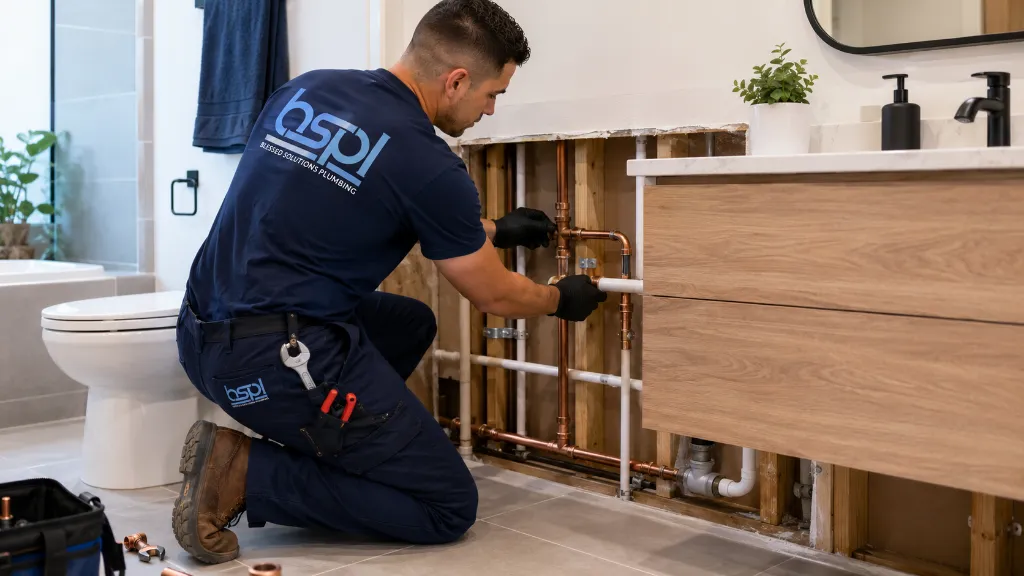
Understanding the process helps you prepare. Let’s break down what to expect from start to finish.
Step-by-Step Guide to Repiping
-
Initial Inspection: A plumber assesses your current system. This step identifies problem areas and helps in planning.
-
Material Selection: Choose between PEX, copper, or CPVC based on your home’s needs and budget.
-
Preparation: The plumber prepares your home by covering floors and protecting areas from dust and debris.
-
Pipe Installation: New pipes are installed, replacing old and damaged ones. This step is critical for ensuring a smooth water flow.
-
Testing and Clean-Up: The system is tested for leaks, and any debris is cleared. This ensures your home is left in great condition.
For more detailed cost insights, visit this site.
Permits and Code Compliance Essentials
Permits are vital for repiping projects. They ensure work meets local regulations. A licensed plumber like Blessed Solutions takes care of these permits, ensuring your home remains code-compliant.
Understanding local plumbing codes is crucial. It prevents future problems and ensures safety. Choosing a local expert guarantees adherence to all necessary codes and regulations, protecting your investment in the long run.
What to expect day by day
A whole-home repipe sounds disruptive, but a well-run one follows a predictable rhythm. On day one the crew maps the fixture layout, protects floors and furniture, and opens small, strategic access points in drywall, usually behind fixtures and in closets rather than in the middle of living-room walls. New PEX or copper lines are run through the attic and walls and connected to each fixture, with a central manifold in the garage or utility area when the layout allows. Water is restored every evening so the household keeps functioning. The county inspector signs off on the rough-in, the old lines are capped and abandoned in place, and the access points are patched ready for paint. For most single-family homes in Orlando, Kissimmee, and St. Cloud the plumbing portion is one to three days.
Signs your home is a repipe candidate
- Polybutylene (gray plastic, often stamped “PB2110”) or galvanized steel supply lines, both of which insurers increasingly refuse to cover.
- Repeated leaks or more than one slab leak; patching one spot in a failing system is money spent twice.
- Low or uneven water pressure, which in galvanized pipe means the inside diameter has corroded nearly shut.
- Rusty or discolored water first thing in the morning.
- A home built before the mid-1990s with original piping and a plan to stay or to sell with a clean inspection report.
Permits, inspections, and insurance
A repipe is permitted work in Orange, Osceola, and Seminole Counties, and that is a good thing: the rough-in inspection verifies pipe sizing, supports, and connections before walls are closed, and the final inspection gives you documentation that follows the house. Keep the permit record and the material invoice; insurers often ask for proof of a repipe when writing or renewing a policy on an older home, and it removes a common objection from buyers and their inspectors. We pull the permit, schedule the inspections, and provide the paperwork as part of the job. Learn more on our re-piping service page, and see our guide to copper vs. PEX vs. CPVC if you are deciding on material.
In conclusion, repiping is a significant decision with long-term benefits. By choosing the right materials and navigating the process wisely, you ensure your home’s plumbing system is robust and reliable. Trusting a local expert like Blessed Solutions Plumbing gives you peace of mind, knowing you’re in capable hands.
Ready to stop chasing leaks? Call (321) 732-5615. ★★★★★ Hundreds of 5-star reviews on Google. Licensed and insured (CFC1432849), serving Orlando, Kissimmee, St. Cloud, and all of Central Florida.
Frequently asked questions
How long does a whole-home repipe take?
For most single-family homes in Central Florida the plumbing work takes one to three days, with water turned back on each evening. Drywall patching and painting follow once the inspection is passed.
Do I have to move out during a repipe?
No. Crews work room by room, protect floors and furniture, and restore water at the end of each day, so families stay in the home throughout the project.
Is PEX or copper better for a Florida repipe?
Both are approved and long-lasting. PEX is the most common choice here because it resists the corrosion that affects copper in mineral-heavy water, installs with fewer joints, and costs less; copper remains a premium option where exposed runs or specific code requirements call for it.
Will my insurance require proof of the repipe?
Often, yes. Insurers writing or renewing policies on older homes frequently ask for the permit record and invoice, especially when the original piping was polybutylene or galvanized steel. We provide that documentation with every repipe.