
When it is time to repipe your home, the material you choose will be in your walls for the next several decades, so it deserves more than a quick decision. In Central Florida, three materials dominate the conversation: copper, PEX, and CPVC. Each is code-approved, each has real strengths, and each has a trade-off that matters more in our climate than it might elsewhere.
Whether you are replacing failing polybutylene or aging galvanized pipe, or simply modernizing an older Orlando home, this guide gives you an honest comparison so you can choose the right pipe for your house, your water, and your budget.
Copper: the time-tested premium option
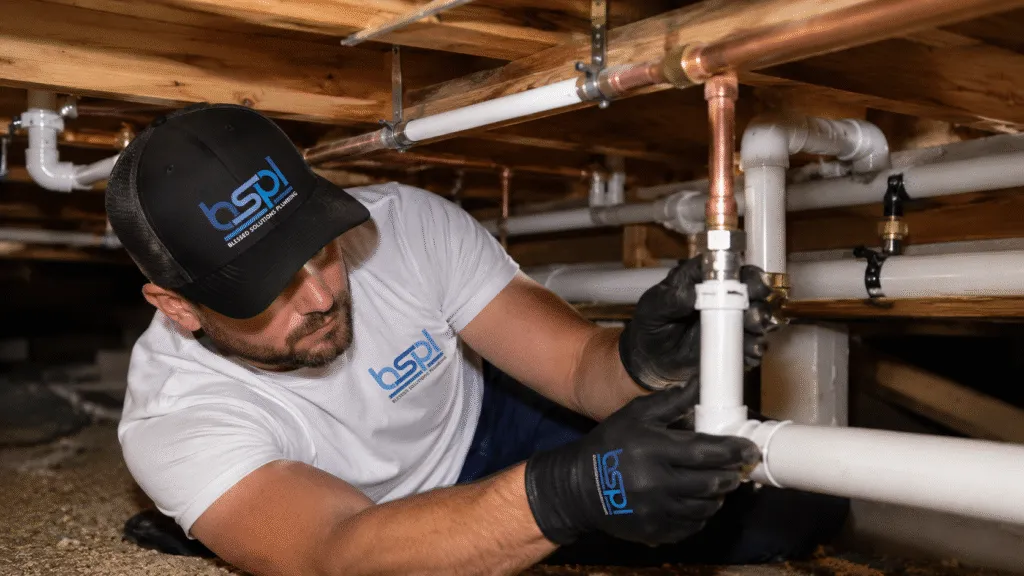
Copper has been the gold standard for water supply piping for over 60 years, and for good reason. It is rigid, strong, naturally resistant to bacteria, and adds no taste or odor to your water. A properly installed copper system lasts 50 to 70 years. The downsides are cost and labor: copper is the most expensive material to buy, every joint must be soldered by a skilled plumber, and in Florida’s acidic or high-chlorine water some copper lines develop pinhole leaks over time. Copper and CPVC are also rigid, which means more fittings and more joints than a flexible system. For homeowners who want the longest-proven track record and do not mind paying for it, copper remains an excellent choice.
PEX: the modern favorite
PEX (cross-linked polyethylene) is the flexible plastic tubing that has become the most popular repipe material in Florida, and most of the repipes we do in Orlando, Kissimmee, and St. Cloud use it. It bends around corners, which means far fewer fittings than copper and fewer potential leak points. It is less expensive than copper, installs faster (which lowers labor costs), and resists the scale and chlorine that attack metal pipe. PEX also tolerates freezing better than any rigid pipe because it can expand slightly. Its expected service life is 25 to 50 years. Two limitations to know: PEX cannot be used outdoors in direct sunlight (UV degrades it), and it must be properly supported and protected where it passes through framing.
CPVC: the budget-friendly middle ground
CPVC (chlorinated polyvinyl chloride) is a rigid plastic pipe rated for both hot and cold water. It is the lowest-cost option of the three, resists corrosion, and is inert so it does not affect water taste. Joints are solvent-glued rather than soldered or crimped. Its typical lifespan is 25 to 40 years. The trade-offs: it is rigid, so like copper it requires more fittings than PEX; it can become brittle with age and may crack under impact or stress; and it has less freeze tolerance than PEX. CPVC is a reasonable choice when budget is the primary driver and the installation is straightforward.
Copper vs. PEX vs. CPVC at a glance
- Cost (material + labor): CPVC lowest, PEX middle, copper highest.
- Lifespan: Copper 50–70 years; PEX 25–50 years; CPVC 25–40 years.
- Flexibility: PEX flexes around obstacles; copper and CPVC are rigid and need more fittings.
- Freeze resistance: PEX is best; copper and CPVC can crack when water freezes inside them.
- Corrosion and scale: PEX and CPVC are immune; copper can pit in aggressive water.
- Water quality: Copper adds no taste; PEX and CPVC are inert.
- Sun exposure: PEX must be kept out of direct sunlight; copper and CPVC tolerate it.
Which material is best for Florida water and Florida homes?
Central Florida’s municipal water is heavily chlorinated and often hard, and many homes sit on concrete slabs with long attic runs. Those conditions favor PEX: it shrugs off chlorine and scale, it routes easily through attics and wall cavities, and its flexibility minimizes the fittings that are the most common failure points in any system. Copper is still a great choice for homeowners who prioritize maximum longevity and are comfortable with the higher price. CPVC fits tighter budgets and simpler layouts, with the understanding that its service life is shorter.
So which should you choose?
For most Orlando-area homes, we recommend PEX as the best balance of cost, durability, and install quality. If you want the longest-proven lifespan and your budget allows, copper is worth it. If cost is the deciding factor, CPVC will do the job. The right answer depends on your home’s layout, your water, how long you plan to stay, and what you want to spend, and that is exactly what we walk through with you before quoting.
Frequently asked questions
Is PEX or copper better for a repipe in Florida?
PEX is the most popular choice in Florida because it resists chlorine and scale, flexes through attics and walls with fewer fittings, and costs less than copper. Copper offers a longer proven lifespan at a higher price. Both are excellent; PEX wins on value for most homes.
How long does PEX last?
PEX typically lasts 25 to 50 years when installed correctly and kept out of direct sunlight. Many manufacturers back it with multi-decade warranties.
Is CPVC a bad choice?
Not at all. CPVC is code-approved, corrosion-proof, and the least expensive option. It simply has a shorter lifespan (25–40 years) and is more brittle than PEX, so it is best for budget-driven projects with straightforward layouts.
How long does a whole-home repipe take?
Most single-family homes take one to three days. We restore water service every evening so you can stay in the home during the project.
Get an honest repipe recommendation
Blessed Solutions Plumbing is a licensed, insured, family-owned plumber serving Orlando, Kissimmee, St. Cloud, and all of Central Florida, with hundreds of 5-star reviews from homeowners we have repiped. We give you a clear comparison, upfront pricing, and financing on larger projects, with no pressure toward the most expensive option. See our whole-home repiping service for details.
Call (321) 732-5615 or schedule online for a repipe estimate today.