
Quick answer: A standard home inspection does not include a sewer camera and does not tell you what your pipes are made of. For buyers in Orlando, Kissimmee, St. Cloud and the rest of Central Florida, BSP1 Plumbing offers a home buyer plumbing inspection package for $495: a sewer camera inspection from the main cleanout through the main line to the city connection or septic tank, plus a whole-house plumbing check that identifies every pipe material (copper, CPVC, PEX, galvanized steel, polybutylene, cast iron, Orangeburg) and flags anything that is not to code. If the home has no accessible cleanout and the camera has to go in by pulling a toilet or through a roof vent, that access is quoted separately.
Why a general home inspection is not enough for plumbing
Home inspectors do a visual check: they run the faucets, flush the toilets, look under sinks and note the water heater’s age. They do not put a camera down the sewer line, they rarely identify supply pipe materials, and they do not test what is behind walls or under the slab. That gap is where the expensive surprises live. The three most common post-closing plumbing bills we see in Central Florida are a failed sewer line (roots, bellies, cracked cast iron), a repipe because the house has polybutylene or galvanized supply lines, and a water heater that was already past its service life on the day of the sale.
What the $495 home buyer package includes
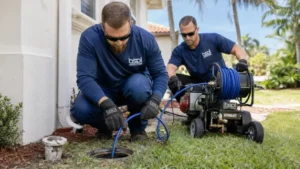
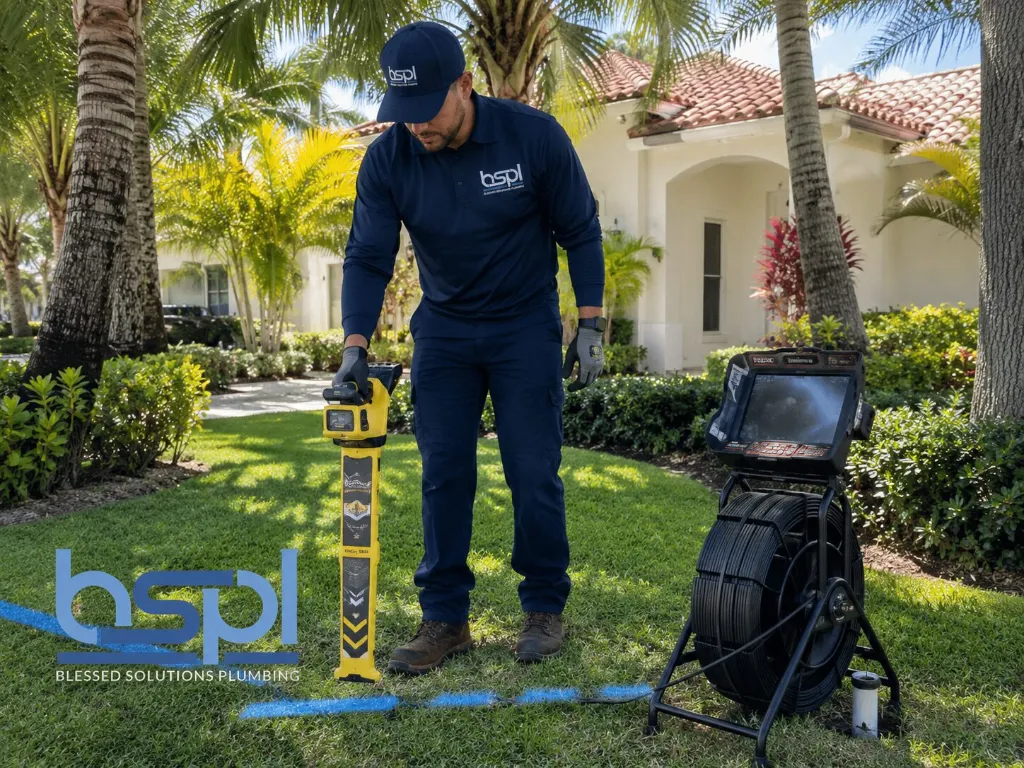
Sewer camera inspection (sewer scope). We run a color inspection camera from the main cleanout through the entire main line to the city tap or the septic tank. We record the video, note the distance and depth of every defect, and show you and your agent exactly what we found. You get the footage, so it can be used in your repair request or price negotiation.
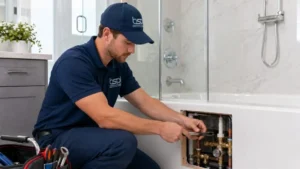
Whole-house plumbing check. A licensed plumber walks the entire home and documents:
- Supply line material: copper, CPVC, PEX, galvanized steel or polybutylene, and its visible condition
- Drain, waste and vent material: PVC, ABS, cast iron or Orangeburg
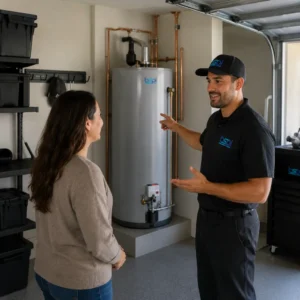
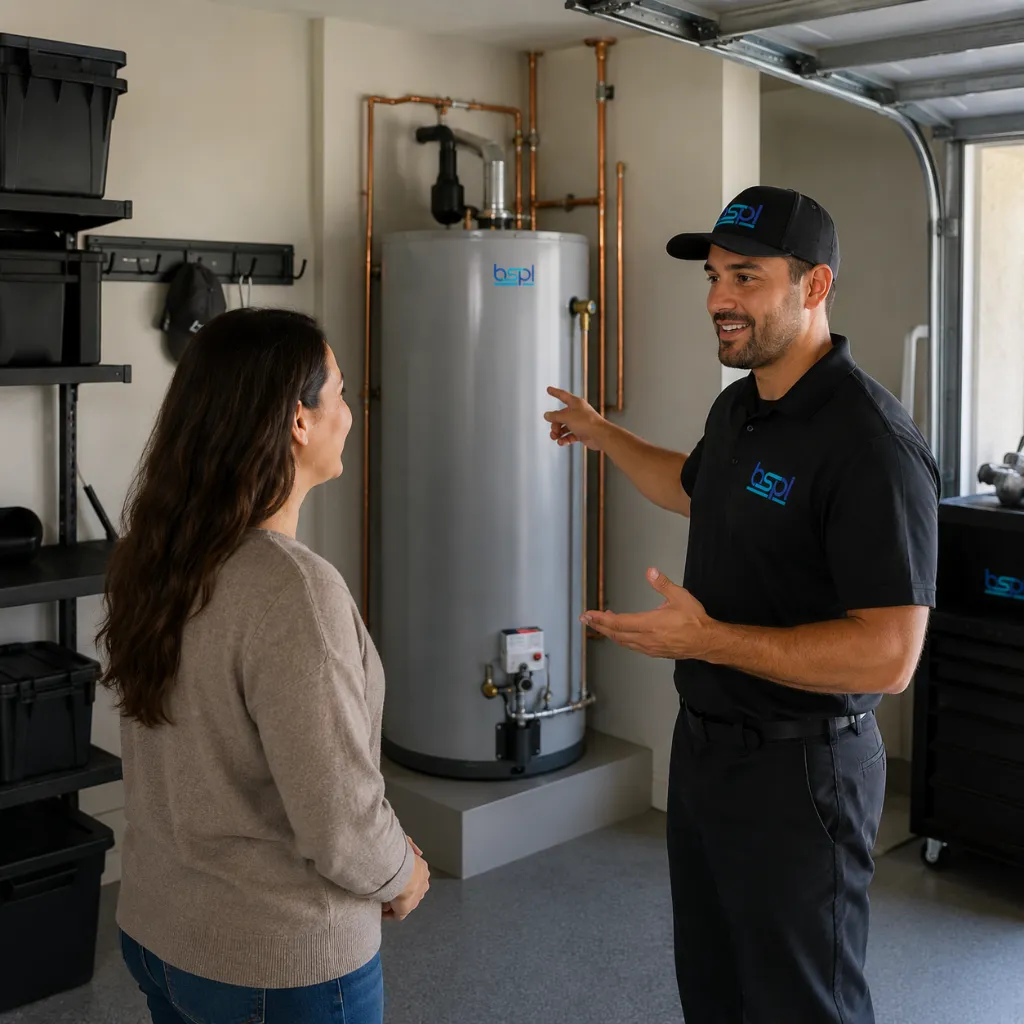
- Water heater: age, tank condition, T&P relief valve and discharge line, drain pan, expansion tank, connections and gas or electrical hookup
- Shut-off valves, angle stops and fixture supply lines at every sink, toilet and appliance
- P-traps and drain connections under every sink, including S-traps and other non-code configurations
- Hose bibs, main shut-off, pressure regulator and a static water pressure reading
- Active leaks and evidence of prior leaks (staining, patched drywall, moisture)
- Anything not to code: missing cleanouts, improper venting, saddle valves, unpermitted work
Written report within 24 hours. Photos, video link, a plain-English summary of what matters and what does not, and a separate quote for any repairs. Repairs are never included in the inspection price, and you are never obligated to use us for them.
Not included: access by removing a toilet or going through a roof vent when there is no usable cleanout (quoted separately before we start), hydro jetting, electronic leak detection, septic pumping and repairs of any kind.
Pipe materials we identify, and what each one means for you
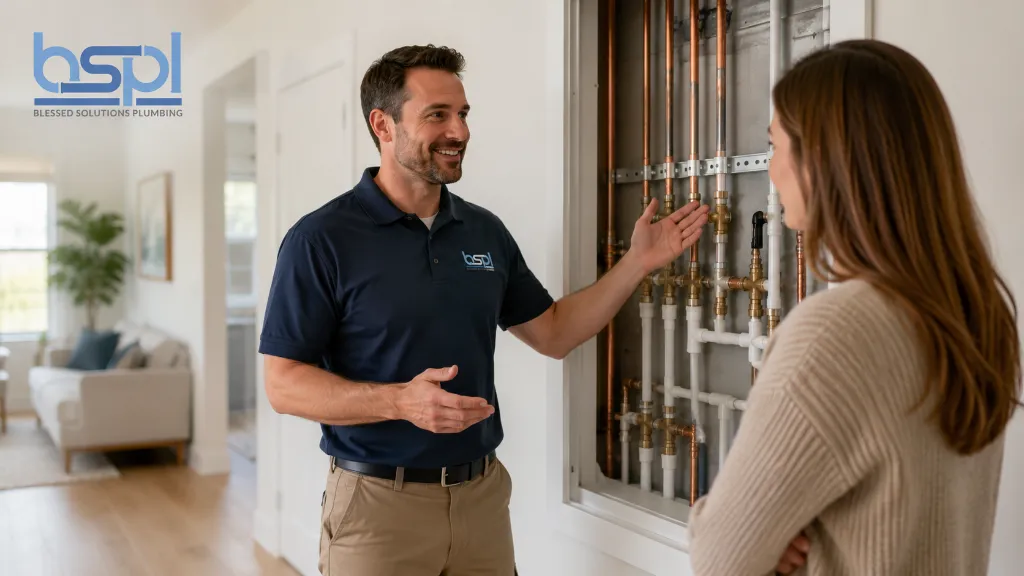
Copper (1960s to 2000s): durable, but in some Central Florida water conditions it develops pinhole leaks after 40 to 50 years. Galvanized steel (pre-1970s): rusts shut from the inside; expect low pressure, brown water and insurers that ask for replacement. Polybutylene (gray “PB” or “Quest” pipe, 1978 to 1995): extremely common in subdivisions built in that window around Orlando, Kissimmee and St. Cloud; it fails at the fittings without warning and many insurance carriers decline or surcharge homes that still have it. CPVC (1980s to 2010s): fine when new, brittle with age, cracks at fittings. PEX: the current standard for repipes. On the drain side, cast iron (pre-1975) scales and channels along the bottom, and Orangeburg (tar-impregnated paper) deforms and collapses. If the home has any of the older materials, the inspection report explains what it means for insurance, for your budget and for the next 10 years.
Red flags we look for on the sewer camera
Root intrusion at the joints, bellies (low spots that hold standing water and debris), offset or separated joints, cracks and breaks, cast iron that has channeled or lost its bottom, Orangeburg deformation, old repairs done with the wrong materials, and tie-ins from additions that were never permitted. Each one is a different repair with a very different price, from a spot repair to a trenchless liner to a full replacement, and the camera tells us which one you are looking at before you sign.
First-time buyer or older home? When to schedule
Schedule the inspection inside your contract’s inspection period, ideally the same week as the general home inspection so the findings can go into the same repair request. For any home built before 1990, we consider the sewer scope essential. For as-is contracts it is even more important, because the inspection is your only chance to walk away or renegotiate. Sellers also order it to avoid surprises, and owners who already live in a home with recurring backups use the same package to get a definitive answer.
How the inspection day works
You or your agent book a time; most inspections take 60 to 90 minutes and we can usually schedule within one or two business days. The plumber walks you through the findings on site, and the written report with photos and video arrives within 24 hours. If repairs are needed, you receive a separate itemized quote that you can take to the seller.
Why Central Florida homeowners call BSP1 Plumbing
Licensed, insured and bilingual (CFC1432849), with an inspection camera on every truck and upfront pricing. We serve Orlando, Kissimmee, St. Cloud, Lake Nona, Hunters Creek, Celebration and all of Central Florida. Call (321) 732-5615. ★★★★★ Hundreds of 5-star reviews on Google.
Frequently asked questions
Does the $495 home buyer package include repairs?
No. The price covers the sewer camera inspection from the main cleanout, the whole-house plumbing check and the written report with photos and video. Any repair is quoted separately and you are free to use any licensed plumber.
What if the house has no main cleanout?
We can still inspect the sewer line by removing a toilet or entering through a roof vent. That access is quoted separately before we start, and we can also install a proper cleanout so future inspections and cleanings are simple.
Can my real estate agent schedule it for me?
Yes. Agents book most of our buyer inspections. We only need the address, the access instructions and the date your inspection period ends, and we send the report to both of you.
Will the report help with homeowners insurance?
Often, yes. Knowing the pipe materials and the water heater’s condition before closing tells you whether an insurer may ask for a repipe or a plumbing certification, so you can price that into the deal instead of discovering it at binding.