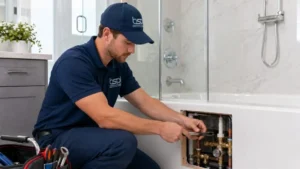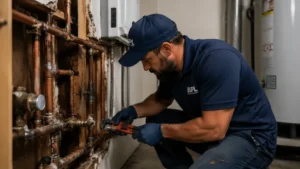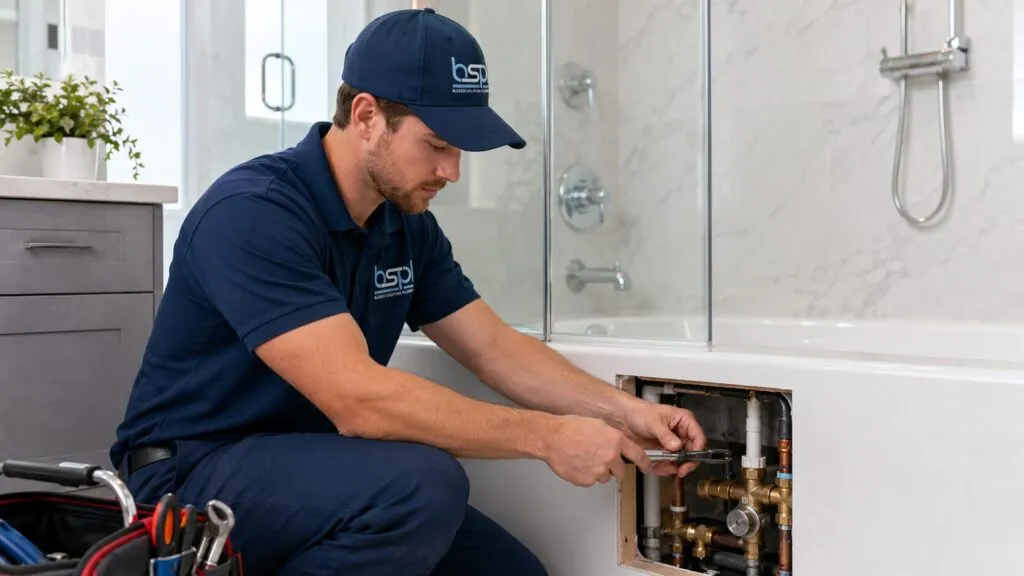
A plumbing emergency is decided in the first five minutes. Water moves fast, and what you do before the plumber arrives determines whether you are dealing with a wet floor or a gutted room, a quick repair or an insurance claim. This guide is written for Central Florida homeowners who want to know exactly what to do when a pipe bursts, a drain backs up, a water heater lets go, or they smell gas, in the order that matters.
Read it now, while nothing is wrong. Then you will know what to do when something is.

Step 1: Shut off the water
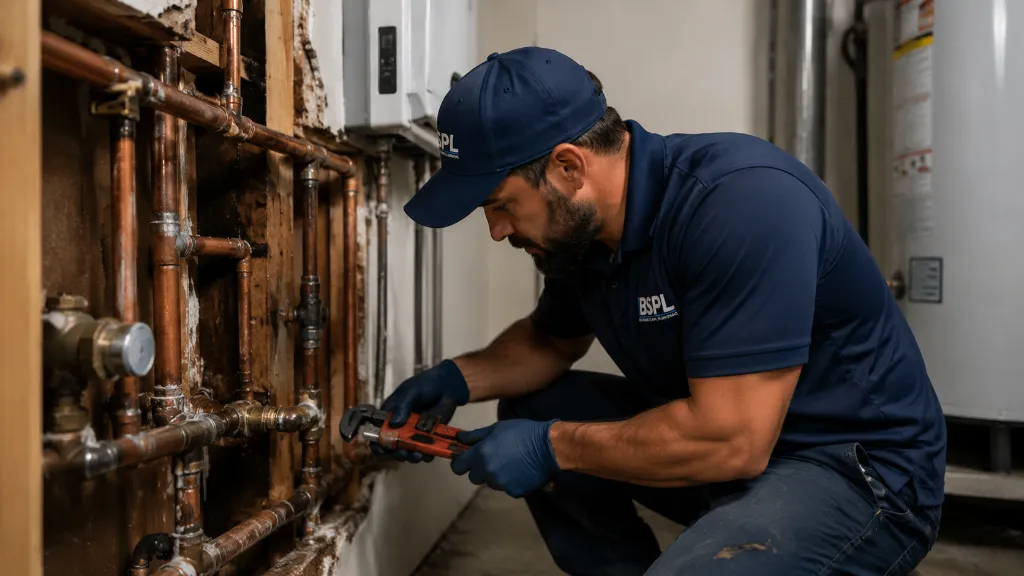
Stopping the flow is always the first move. For a single fixture (a toilet, a sink, a washing machine), close the fixture shutoff under the sink, behind the toilet, or at the washer box. For a burst pipe, a major leak, or anything you cannot isolate, close the main shutoff, usually where the water line enters the home, at the meter box near the street, or in the garage. If you do not know where your main is, find it today; a seized or hidden valve costs precious minutes when it counts.
Step 2: Kill the power or gas if needed
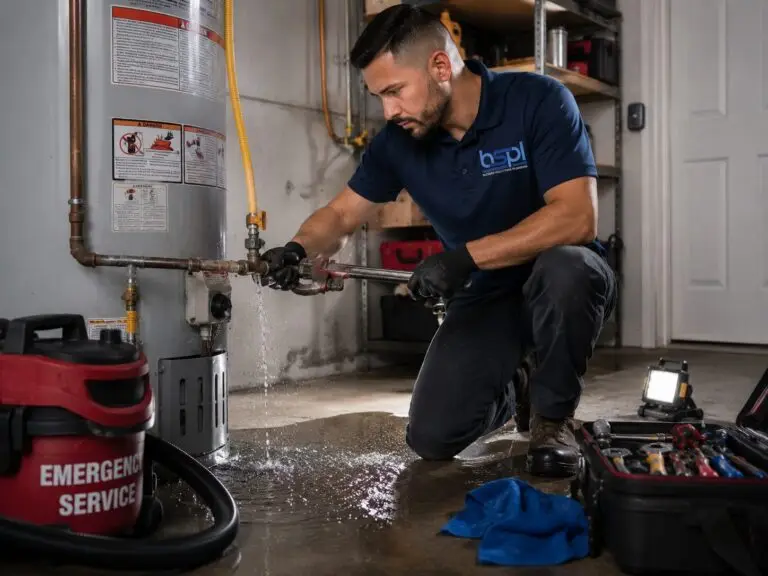
If water is anywhere near electrical outlets, appliances, or the panel, turn off the breaker for that area before you step into it. For a leaking water heater, shut off its water supply valve and then its power: the breaker for an electric unit, or the gas valve on the supply line for a gas unit. Running a water heater with the tank draining can destroy the elements or burner. If you smell gas, skip every other step: leave the house, leave the door open, and call 911 and the gas company from outside. Do not flip switches or use anything with a spark.
Common emergencies and what to do
- Burst pipe. Shut off the main, then open a cold faucet to relieve pressure and drain the line. Move belongings out of the water. Call for emergency service.
- No water. Check that the main is open and ask a neighbor whether they have water (it may be a utility issue). If it is just your home, it may be a failed main line or a frozen or broken pipe; call us.
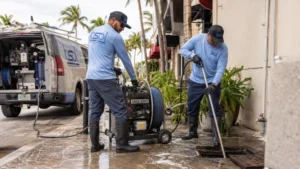
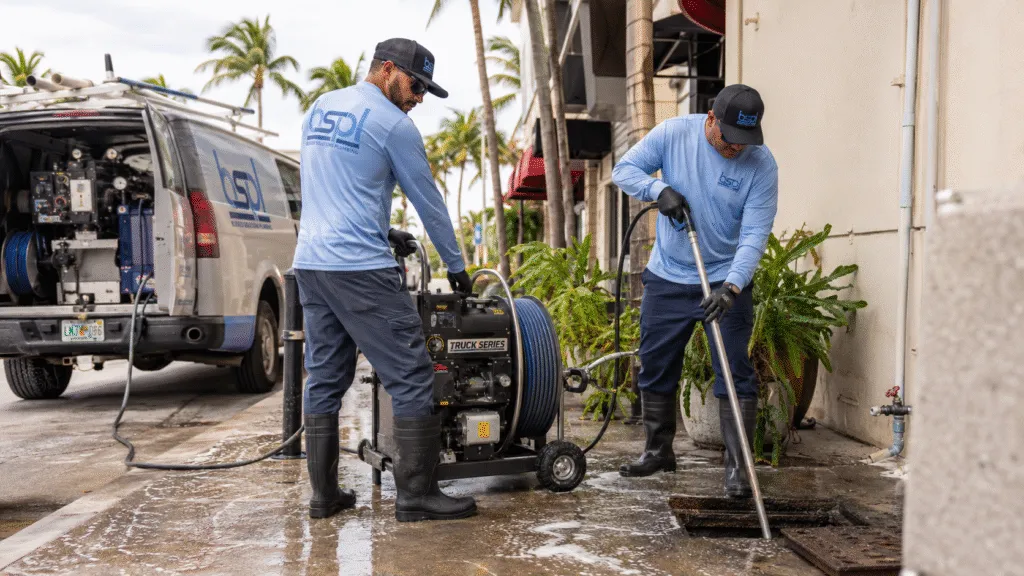
- Sewage backup. Stop using every drain and toilet in the house immediately; anything you run will come up somewhere. This is usually a main line blockage and needs a professional with a cable machine or hydro-jetter.
- Water heater leak. Shut off the water valve on top of the unit and its power or gas. If the leak is from the tank itself, the unit will need replacement; get water heater help the same day.
- Overflowing toilet. Close the shutoff valve at the wall behind the toilet. If it will not turn, lift the float inside the tank to stop the fill. Do not flush again.
- Gas smell. Leave the home, then call 911 and the gas company. Call a licensed gas plumber once the utility has made the area safe.
- Active flooding from an unknown source. Shut off the main. If the water keeps coming, the leak is between the meter and the house, or it is not your supply at all (a neighbor, the street, or rain). Call us and we will find it.

While you wait for the plumber
- Move furniture, rugs, and electronics out of the water.
- Soak up standing water with towels, a mop, or a wet vacuum; the less time water sits, the less damage to flooring and drywall.
- Run fans and the A/C to start drying and limit mold, which can begin within 24 to 48 hours in Florida humidity.
- Take photos and video of the damage and the source for your insurance claim.
- Do not use the affected drains or fixtures until the plumber clears them.
When to call immediately
Some situations should never wait until morning: active flooding you cannot stop, sewage inside the home, a water heater dumping its tank, a gas smell (after calling 911), no water to the entire house, or a leak near electrical equipment. These are what 24/7 emergency calls are for. If you are unsure whether it is an emergency, call anyway; we would rather tell you it can wait than have you wait on something that cannot.
Prevent the next one
Most emergencies have a warning sign. A rising water bill often means a hidden leak. A rumbling water heater past 10 years is a tank on borrowed time. A drain that keeps slowing is a backup in progress. A yearly plumbing inspection, fresh supply hoses, and knowing your shutoffs prevent the overwhelming majority of the calls we get at 2 a.m.
Frequently asked questions
What should I do first in a plumbing emergency?
Shut off the water: the fixture valve for a single fixture, or the main for a burst pipe or major leak. Then turn off power or gas to any affected appliance, and call for emergency service.
Where is the main water shutoff in a Florida home?
Usually where the water line enters the home, in the garage, or at the meter box near the street. Find it before you need it and confirm it turns.
Is a sewage backup an emergency?
Yes. Stop using all drains and toilets immediately and call a plumber; anything you run will back up into the home. It is usually a main line blockage.
What counts as a 24/7 plumbing emergency?
Active flooding you cannot stop, sewage inside the home, a leaking water heater, no water to the whole house, a gas smell, or a leak near electrical equipment. When in doubt, call.
24/7 emergency plumber in Central Florida
Blessed Solutions Plumbing is licensed, insured, and available 24/7 throughout Orlando, Kissimmee, St. Cloud, and Central Florida for burst pipes, backups, water heater failures, and gas line emergencies, with upfront pricing and hundreds of 5-star reviews from homeowners we have helped at the worst possible moment.
Call (321) 732-5615 now, any time, day or night.