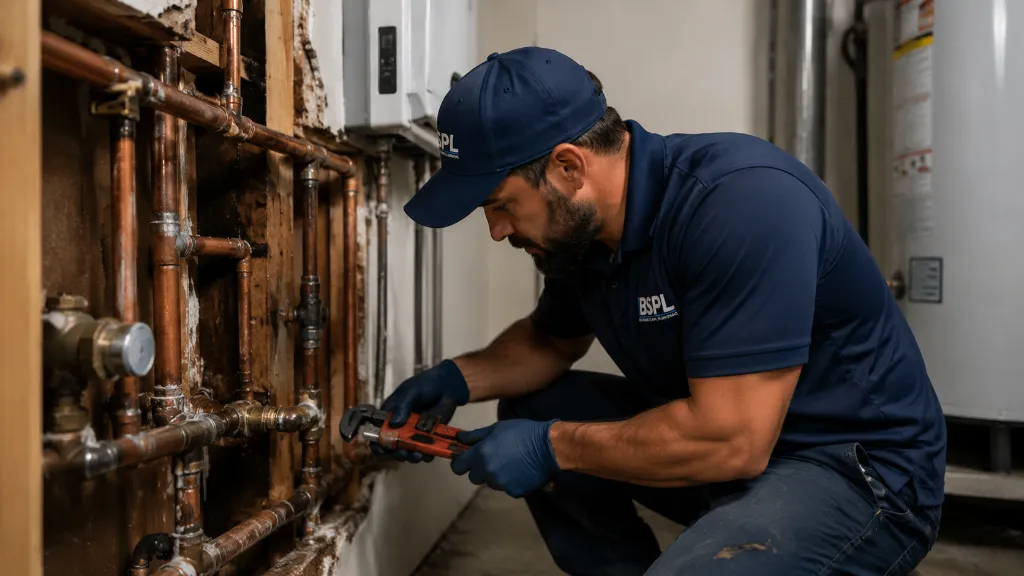

The most expensive leaks are the ones you cannot see. A dripping faucet costs you a few dollars. A hidden leak inside a wall, under the slab, or beneath the floor can quietly run for weeks or months, driving up your water bill, feeding mold, and softening drywall, subfloor, and foundation before you ever notice a drop. In Central Florida, where most homes sit on concrete slabs and the water table is high, hidden leaks are common and the damage adds up fast.
This guide gives you the warning signs, a simple test you can run today, how professionals pinpoint a leak without tearing up your home, and exactly what to do if you suspect one.
7 signs you may have a hidden leak
- A water bill that jumped with no change in how you use water.
- The sound of running water when every fixture is off.
- Warm spots on the floor, a classic sign of a hot-water slab leak.
- Musty odors, mildew, or visible mold on walls, baseboards, or ceilings.
- Stains, bubbling paint, or soft drywall with no obvious source.
- Low water pressure that developed gradually.
- Cracks in the slab or tile, or a floor that feels soft or uneven.
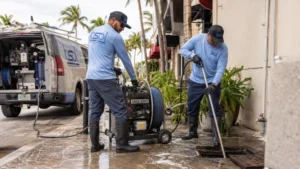
Outside, watch for a patch of lawn that is always green or soggy, or a driveway or walkway that is wet when it has not rained.
A quick test you can do yourself
You can confirm whether water is leaving your system in a few minutes:
- Make sure every faucet, appliance, and irrigation zone is off.
- Find your water meter and write down the reading (or note whether the small leak indicator is turning).
- Wait 1 to 2 hours without using any water.
- Check the meter again. If the reading changed, water is leaking somewhere.
To narrow it down, close the main shutoff to the house and repeat. If the meter still moves, the leak is in the service line between the meter and the house. If it stops, the leak is inside.
How professionals pinpoint the leak
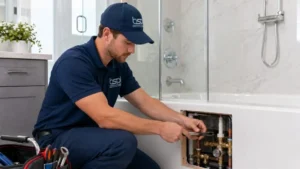
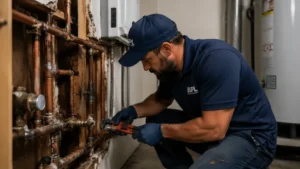
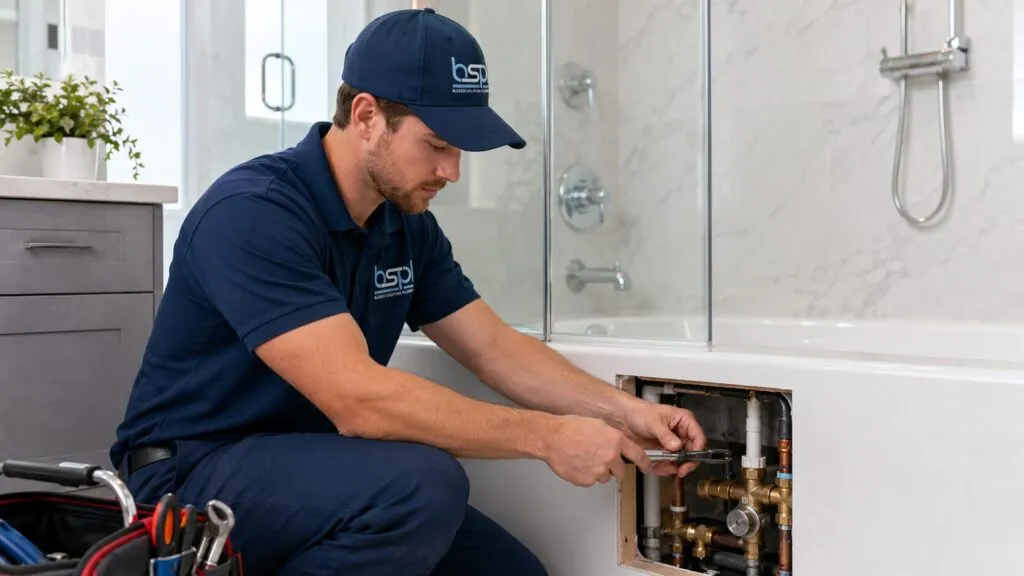
Finding a leak is not the same as finding a wet spot. Water travels, so the stain on the ceiling is often far from the actual break. Licensed leak detection specialists use non-invasive tools to locate the source precisely:
- Acoustic listening equipment amplifies the sound of water escaping a pressurized pipe, even through concrete.
- Thermal imaging shows the temperature difference a hot-water leak creates in a slab or wall.
- Pressure testing isolates sections of the system to confirm which line is losing pressure.
- Line tracing maps where the pipes actually run so the repair opening is small and in the right place.
The payoff is a repair that opens one small section of slab or wall instead of a demolition hunt.

Why slab leaks deserve special attention
Most Central Florida homes are built on a concrete slab with water lines running through or beneath it. When one of those lines fails, the water has nowhere to go but into the ground and up into the slab. Left alone, a slab leak can erode soil, crack the foundation, buckle flooring, and create mold conditions throughout the home. Warm floor spots, a constantly running water heater, and a spike in the bill are the usual tells. Slab leak detection is a specialty, and locating it accurately is what keeps the repair from becoming a reconstruction.
What to do if you suspect a leak
- Run the meter test above to confirm water is leaving the system.
- If water is actively damaging the home, shut off the main at the house or at the meter.
- Do not start opening walls or floors to look for it; you will likely open the wrong spot.
- Call a licensed leak detection professional to locate it precisely.
- Document any damage with photos for your insurance claim.
What a hidden leak really costs
The leak itself is usually a modest repair. The damage it causes while undetected is what gets expensive: ruined flooring, mold remediation, drywall replacement, and in the worst cases foundation work. Every week a hidden leak runs, that bill grows. Same-day detection is almost always cheaper than waiting to see if it gets worse.
Frequently asked questions
How do I know if I have a slab leak?
Warm spots on the floor, a water heater that runs constantly, a higher water bill, the sound of running water with everything off, or cracks and soft spots in the floor are the most common signs. A meter test confirms water is leaving the system.
Can a plumber find a leak without breaking the wall or floor?
Yes. Acoustic listening, thermal imaging, pressure testing, and line tracing locate the leak precisely from the surface, so only a small, targeted opening is needed for the repair.
Does homeowners insurance cover a hidden leak?
Policies vary. Many cover sudden water damage but not long-term seepage, which is one more reason to detect and repair a leak quickly and document everything. Check your policy and ask your agent.
How much does leak detection cost?
Professional detection is a modest, upfront-priced service, and it is almost always far less than the cost of exploratory demolition or ongoing water damage.
Precise leak detection in Orlando
Blessed Solutions Plumbing offers same-day leak detection and slab leak detection throughout Orlando, Kissimmee, St. Cloud, and Central Florida, using acoustic, thermal, and pressure tools to find the leak without tearing up your home. Licensed, insured, upfront pricing, and hundreds of 5-star reviews.
Call (321) 732-5615 or schedule online before a small leak becomes a big repair.