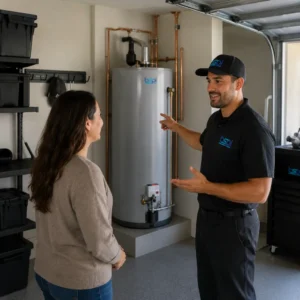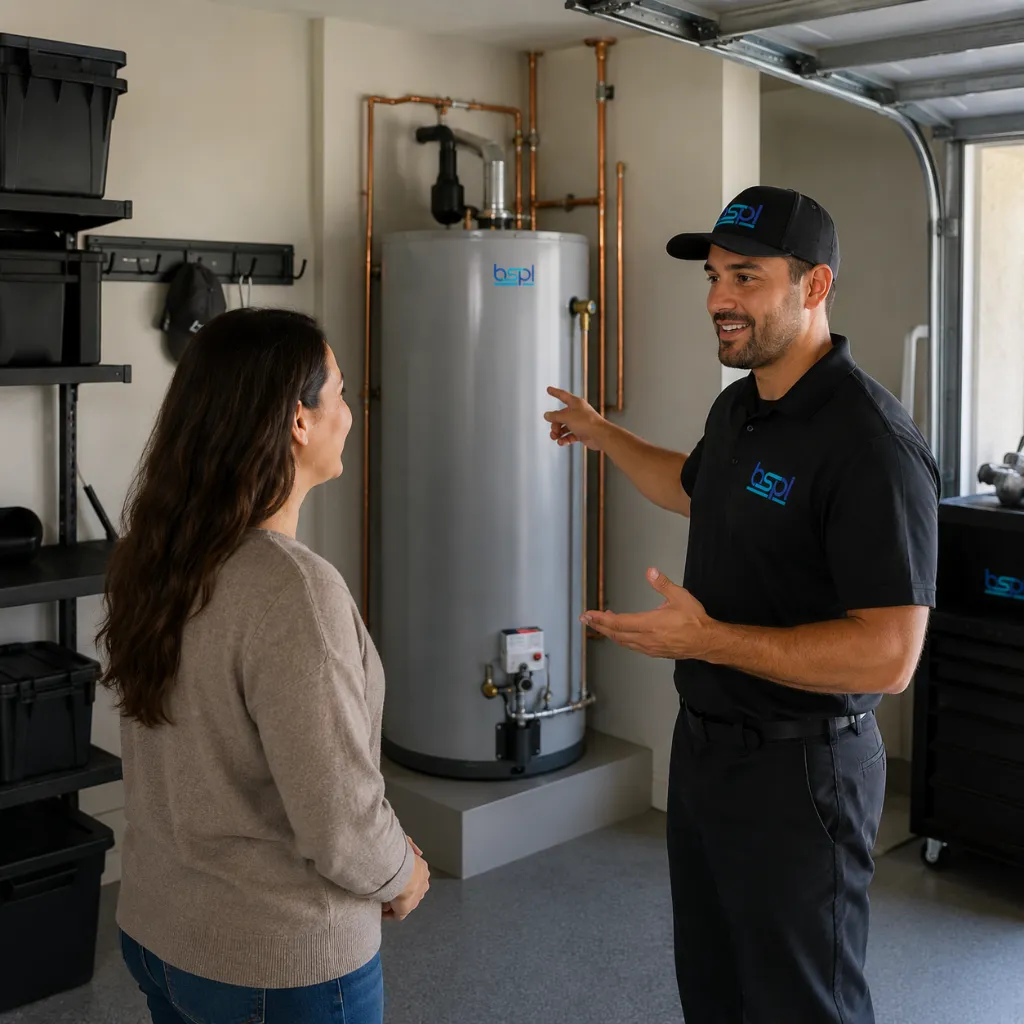
Quick answer: A tank water heater costs less upfront and is simpler to replace, but takes up space and can run out of hot water. A tankless water heater costs more to install but gives you endless hot water on demand, lasts longer (often 20+ years), saves space, and lowers energy bills. For many Central Florida homes, tankless pays off over time — but the right choice depends on your household size, budget, and hot-water habits.
Tank water heaters: pros and cons
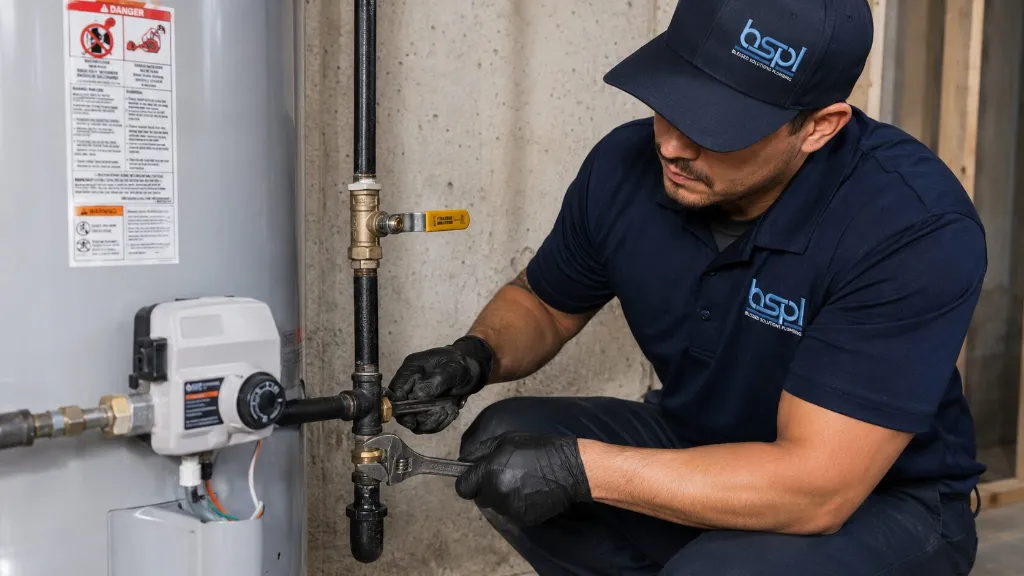
- Pros: lower upfront cost, simple installation, easy to service
- Cons: limited hot water (once the tank empties, you wait), takes up floor space, typically lasts 8-12 years, standby energy loss
Tankless water heaters: pros and cons
- Pros: endless hot water on demand, compact wall-mounted design, longer lifespan (20+ years), lower energy bills, no tank to leak or flood
- Cons: higher upfront cost, may need electrical or gas upgrades, output can be limited if many fixtures run at once
Which one is right for you?
Choose a tank if you want the lowest upfront cost and have simple hot-water needs. Choose tankless if you want long-term savings, endless hot water for a busy household, or you are tight on space. In Florida’s warm climate, tankless units also work efficiently since incoming water is not ice-cold.
What about maintenance?
Both benefit from routine service. Tank heaters should be flushed periodically to remove sediment; tankless units should be descaled, especially with Florida’s hard water. Regular maintenance protects your investment and keeps the warranty valid.
How each one performs in a Florida household
The biggest practical difference is how hot water is delivered. A tank keeps 40 to 80 gallons hot around the clock, so the first shower is instant and the fourth shower in a row may run cold. A tankless unit heats water only as it flows, so it never runs out, but it has a maximum flow rate; running two showers and the dishwasher at once can exceed a smaller unit, which is why sizing matters more than brand. Florida helps tankless performance: incoming groundwater is warm most of the year, so a unit does not have to raise the temperature as far as it would up north, and it delivers more gallons per minute as a result.
Installation differences you should know about
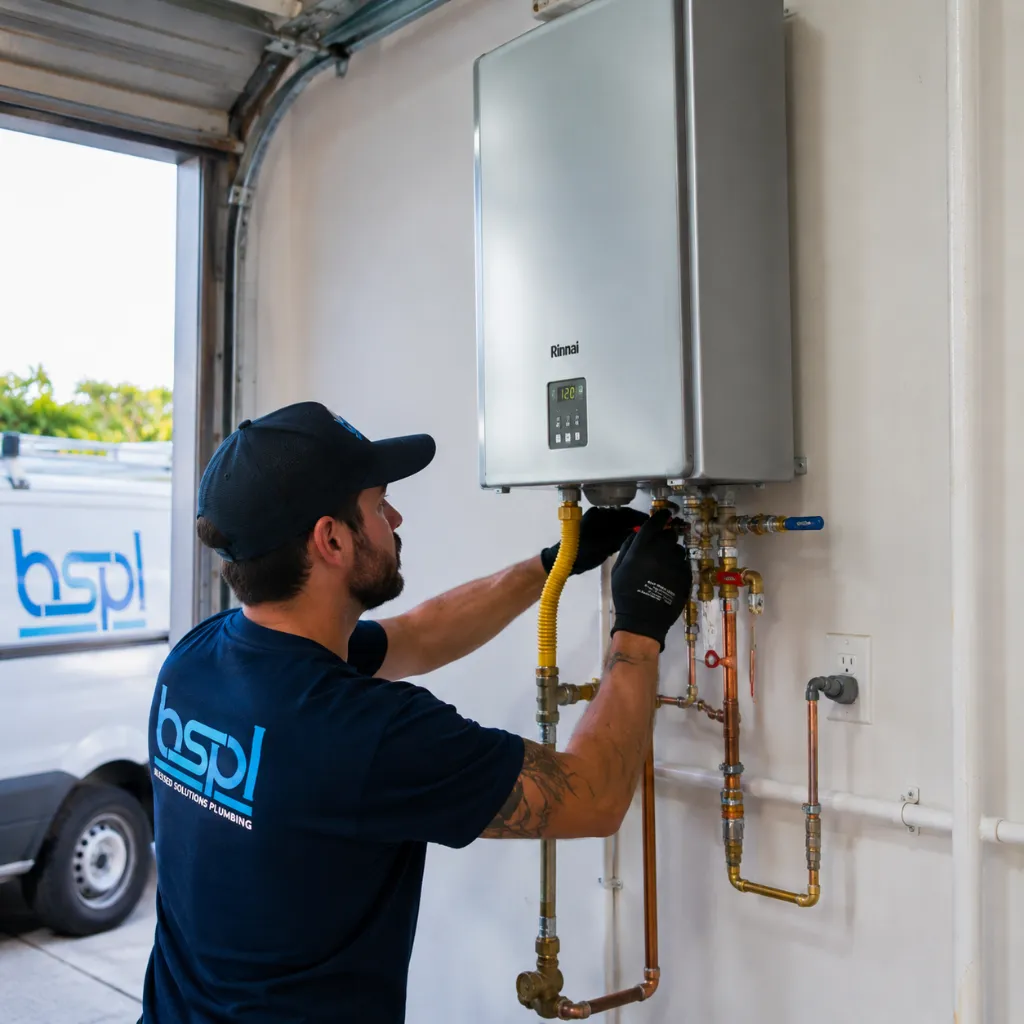
- Gas supply. A tankless gas unit draws far more gas while running than a tank, so the existing line may need to be upsized.
- Venting. Condensing tankless units vent through PVC, which is easy; non-condensing units need stainless venting.
- Electrical. Whole-home electric tankless units need multiple dedicated breakers and sometimes a panel upgrade, which is why electric tankless is usually a poor fit for larger homes here.
- Space and placement. Tankless units mount on the wall and can go closer to the fixtures they serve, shortening the wait for hot water.
- Permits. Both require a permit and inspection in Orange and Osceola Counties; we handle that as part of the job.
Maintenance in hard-water Central Florida
Hard water affects both systems, just differently. Sediment settles at the bottom of a tank, insulating the burner and corroding the steel, so a tank needs an annual flush and periodic anode replacement. Scale forms inside a tankless heat exchanger, reducing flow and efficiency, so a tankless unit needs an annual descaling flush with isolation valves installed at the time of installation to make that service quick. Either way, the yearly service is what turns the “8 to 12 years” and “20-plus years” lifespans from a brochure promise into reality in Orlando, Kissimmee, and St. Cloud. A water softener protects both and is worth considering if you are already investing in a new heater.
Let BSP1 help you decide
We install and service both tank and tankless water heaters across Orlando, Kissimmee, St. Cloud, and the greater Orlando metro. We will look at your home, your usage, and your budget and give you an honest recommendation with upfront pricing — licensed, insured, and bilingual (CFC1432849). Call (321) 732-5615. ★★★★★ Hundreds of 5-star reviews on Google.
Frequently asked questions
Is tankless worth it in Florida?
Often yes — endless hot water, long lifespan, and lower energy bills. It costs more upfront but can pay off over time.
How long does a tankless water heater last?
With proper maintenance, 20+ years — nearly double a typical tank unit.
Does a tankless heater need special maintenance?
Yes, periodic descaling is important due to Florida’s hard water.
Do you serve my area?
We cover Orlando, Kissimmee, St. Cloud, Lake Nona, Winter Park, Oviedo, Windermere, Lake Mary, Winter Garden, and surrounding Central Florida communities.