
Quick answer: Most commercial grease traps should be cleaned every 1 to 3 months, or whenever the grease and solids reach about 25% of the trap’s capacity (the “one-quarter rule”). Busy kitchens may need service monthly, while lower-volume operations can go longer. Staying on schedule keeps your kitchen up to code, prevents backups and foul odors, and avoids costly emergency service.
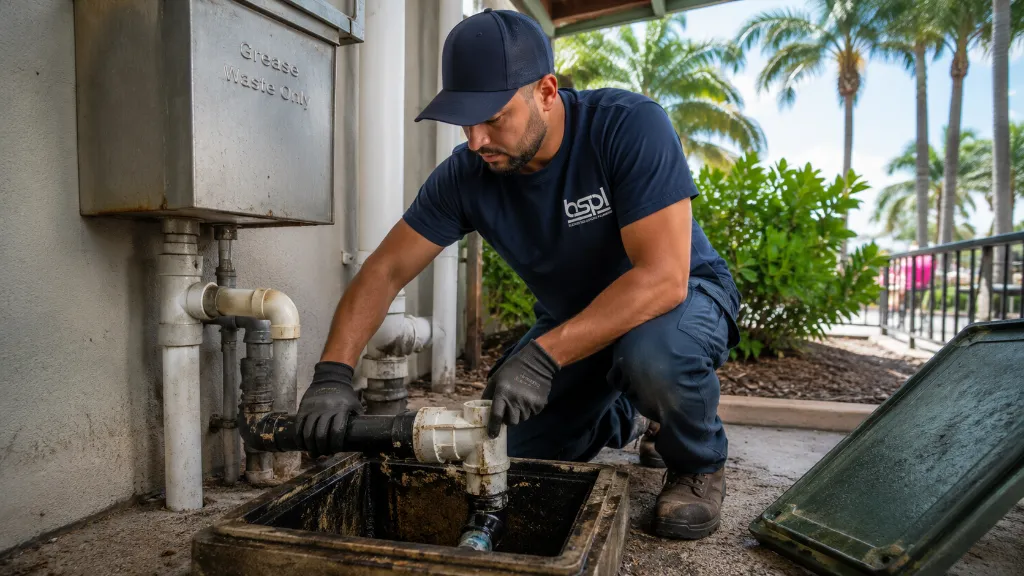
Why regular grease trap cleaning matters
- Prevents backups. A full trap lets grease flow into your lines and city sewer, causing clogs and messy backups.
- Keeps you compliant. Florida municipalities require restaurants to maintain grease traps — neglect can mean fines.
- Stops odors. Built-up grease turns rancid and creates foul smells in your kitchen.
- Protects the environment. Grease in the sewer causes major problems downstream.
How often, really?
It depends on volume. A high-traffic restaurant frying daily may need monthly cleaning; a cafe or small kitchen might go every 2-3 months. The reliable guide is the 25% rule: once fats, oils, and grease (FOG) fill a quarter of the trap, it is time. If you are unsure, we can set a schedule based on your kitchen’s actual usage.
Signs your grease trap needs cleaning now
- Slow drains in the kitchen
- Foul, rancid odors near drains or the trap
- Grease backing up into sinks or floor drains
- It has been more than 90 days since the last cleaning
What determines your cleaning schedule
Three factors set the interval for a restaurant, cafeteria, or ghost kitchen in Orlando, Kissimmee, or St. Cloud: the size of the interceptor, the volume of fried and greasy food coming out of the kitchen, and the local sewer authority’s rules. Most Central Florida utilities apply the “25 percent rule”: once grease and solids make up a quarter of the trap’s liquid depth, it must be pumped. For a small under-sink trap in a busy kitchen that can mean every two to four weeks; for a large in-ground interceptor it may be every one to three months. The only way to know is to measure, which is why we check and log the levels on every visit and adjust your schedule instead of guessing.
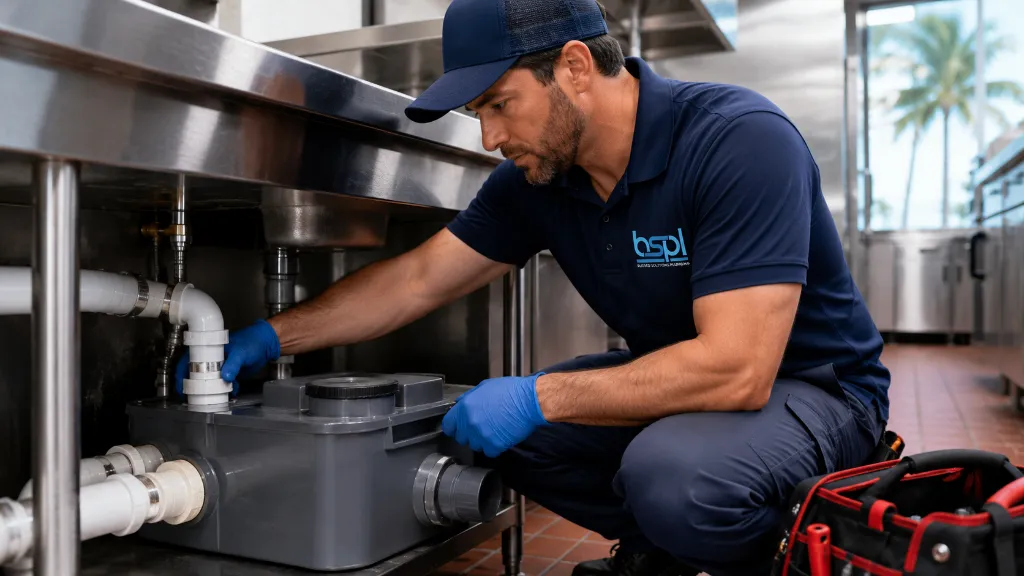
What a complete grease trap service includes
- Full pump-out of the grease layer, the liquid, and the settled solids, not a skim of the top.
- Scraping and cleaning of the walls, baffles, and inlet and outlet tees where grease hardens.
- Inspection of the baffles, lid, gasket, and plumbing connections for damage or leaks.
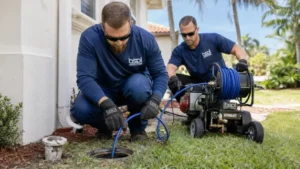
- Line check for the drain lines feeding the trap, with hydro-jetting when grease is already backing up the kitchen lines.
- Documentation: a service manifest for your records and for the health or sewer inspector who asks for it.
The cost of skipping a cleaning
A trap that is past due does not fail quietly. Grease escapes into the sanitary sewer, which can bring fines from the utility and a notice to correct. Lines back up during the dinner rush, which means shutting the kitchen down and an emergency call. Odors reach the dining room. And a neglected interceptor corrodes faster, turning a routine service into a replacement. A standing schedule with a reliable plumber costs a fraction of any one of those outcomes, and it keeps you ready for every inspection. Ask us about our Commercial Plan for scheduled service across one location or several.
BSP1 keeps your kitchen running
We install, pump, and service grease traps for restaurants and commercial kitchens across Orlando, Kissimmee, St. Cloud, and the greater Orlando metro — on a schedule that keeps you compliant and backup-free. Licensed, insured, and bilingual (CFC1432849). Call (321) 732-5615. ★★★★★ Hundreds of 5-star reviews on Google.
Frequently asked questions
How often should a grease trap be cleaned?
Typically every 1-3 months, or when grease and solids reach 25% of the trap’s capacity.
What happens if I do not clean my grease trap?
Backups, foul odors, code violations and fines, and possible emergency plumbing costs.
Can you set up a recurring service schedule?
Yes — we build a cleaning schedule around your kitchen’s volume so you never fall behind.
Do you serve my area?
We cover Orlando, Kissimmee, St. Cloud, Lake Nona, Winter Park, Oviedo, Windermere, Lake Mary, Winter Garden, and surrounding Central Florida communities.