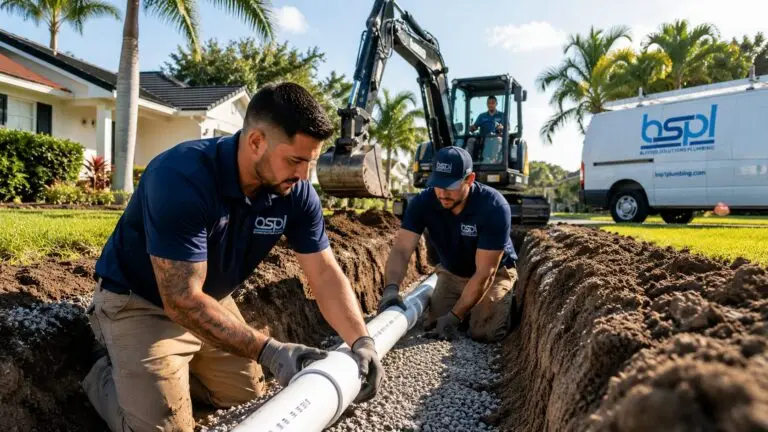
If your Orlando-area home was built before the mid-1970s, the drain and sewer lines under your slab are probably cast iron. Newer homes, and almost every replacement line installed today, use PVC. Both materials move wastewater, but they age, fail, and get repaired very differently, and in Central Florida’s humid, mineral-heavy environment that difference matters more than most homeowners realize.
This guide compares cast iron and PVC side by side, walks through the warning signs of a failing cast iron line, and explains how we decide between cleaning, spot repair, and full replacement, so you know what to expect before you ever call a plumber.

Cast iron: built to last, but not forever
Cast iron drain pipe is heavy, quiet, and genuinely durable, which is why it was the standard for decades. A well-installed cast iron system typically lasts 50 to 75 years. The catch is that it corrodes from the inside. As wastewater flows through, the interior surface slowly rusts and scales, the pipe wall thins, and the bottom of the pipe (where water sits) can channel or crack. Florida’s humidity, warm groundwater, and water chemistry all speed that process up. Many cast iron lines in Orlando, Kissimmee, and St. Cloud homes are now at or past the end of their service life.
PVC: the modern drain and sewer standard
PVC does not corrode, resists root intrusion and clogs thanks to its smooth interior, and is far lighter and faster to install. Underground, PVC typically lasts 50 to 100 years. Its trade-offs are modest: it is somewhat noisier than cast iron when water rushes through, and it is not fire-rated the same way, which is why some multi-story and commercial projects still require cast iron or hubless cast iron by code. For nearly every single-family home and most light-commercial work, PVC is the clear choice for new drain and sewer lines.
Cast iron vs. PVC at a glance
- Lifespan: Cast iron 50–75 years; PVC 50–100 years underground.
- Corrosion: Cast iron rusts and scales from the inside; PVC does not corrode.
- Clogs and roots: Cast iron’s rough interior catches debris and roots; PVC’s smooth wall resists both.
- Noise: Cast iron is quieter; PVC is slightly louder.
- Fire rating: Cast iron carries a fire rating PVC does not, which matters in some commercial and multi-story codes.
- Cost to install: Cast iron costs more in material and labor; PVC is lighter and faster.
5 signs your cast iron drain line is failing
- Recurring backups in the same drain or in several fixtures at once.
- Sewage or sulfur odors inside the home or in the yard.
- Discolored water or rust flakes in a tub or floor drain.
- Cracks or sunken spots in the slab, tile, or flooring above the line.
- Unusually green, lush grass over the sewer line path, a classic sign of a leak feeding the lawn.
Any one of these is worth a look. Two or more usually means the line needs a camera inspection before it fails completely.
Repair or replace? How we decide
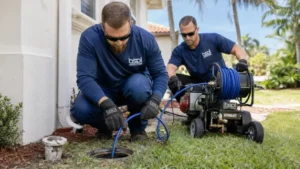
We never guess from the surface. The first step is always a sewer camera inspection, which shows us the actual condition of the pipe wall, any cracks or channeling, and where the trouble spots are. From there, the options are:
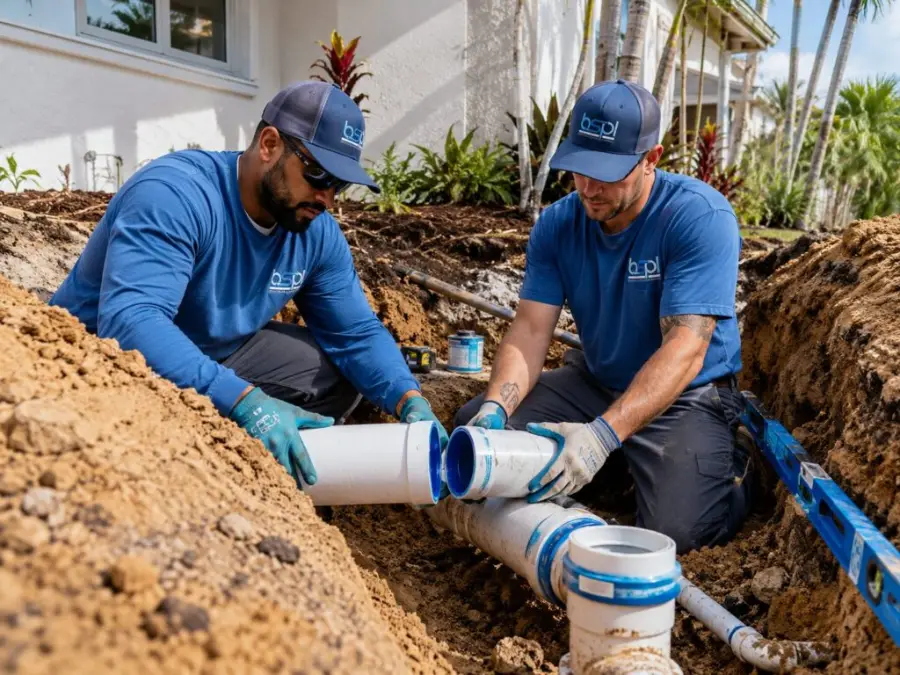
- Spot repair when the damage is limited to one section. Our spot sewer line repair replaces only the failed segment.
- Full replacement when scaling, cracking, or channeling runs the length of the line. New PVC gives you a fresh 50-plus-year system.
- Trenchless methods in certain situations, which can rehabilitate a line with far less digging through driveways, landscaping, or slab.
The camera footage is yours to see, so the recommendation is based on what is actually in the pipe, not on a sales pitch.
What about cleaning cast iron instead?
If the camera shows heavy scale but a structurally sound pipe wall, hydro-jetting can strip years of build-up and restore most of the pipe’s original diameter. That often buys a cast iron line several more years of reliable service. If the wall is already cracked or channeled, however, jetting is not the answer, and we will tell you that honestly rather than sell you a cleaning that will not hold.
Why this matters in Central Florida specifically
Our region has an unusually large stock of 1950s–1970s block homes on slabs, which means an unusually large number of original cast iron drain systems quietly reaching the end of their life at the same time. Add a high water table, aggressive tree roots in older neighborhoods, and summer storm loads on the sewer system, and the margin for a failing line gets thin. Catching it early with an inspection is almost always cheaper than discovering it with a backup during a holiday weekend.
Frequently asked questions
How long do cast iron sewer pipes last in Florida?
Typically 50 to 75 years, and often toward the shorter end here because Florida’s humidity and water chemistry accelerate internal corrosion. Many homes built before the mid-1970s are now due for inspection.
Is PVC better than cast iron for a sewer line?
For almost every residential application, yes. PVC does not corrode, resists clogs and roots, lasts 50 to 100 years underground, and costs less to install. Cast iron is still required in some multi-story and commercial settings because of its fire rating.
Can a cast iron drain line be repaired instead of replaced?
Often, yes. If the damage is confined to one section, a spot repair replaces just that segment. If the camera shows widespread scaling or cracking, full replacement is the smarter long-term investment.
Will hydro-jetting damage old cast iron pipe?
Not when the pipe wall is sound, and we always confirm that with a camera first. Jetting clears scale and debris from healthy cast iron; it is not used on pipe that is already cracked or channeled.
Talk to a licensed Orlando plumber
Blessed Solutions Plumbing is licensed, insured, and family-owned, serving Orlando, Kissimmee, St. Cloud, and all of Central Florida, with hundreds of 5-star reviews from homeowners and property managers. Whether you need a camera inspection, a spot repair, or a full line replacement, you get upfront pricing and a straight answer. Explore our full range of drain services, or reach us directly.
Call (321) 732-5615 or schedule online to book a sewer camera inspection today.